
VOL. I, ISSUE 7
The Note
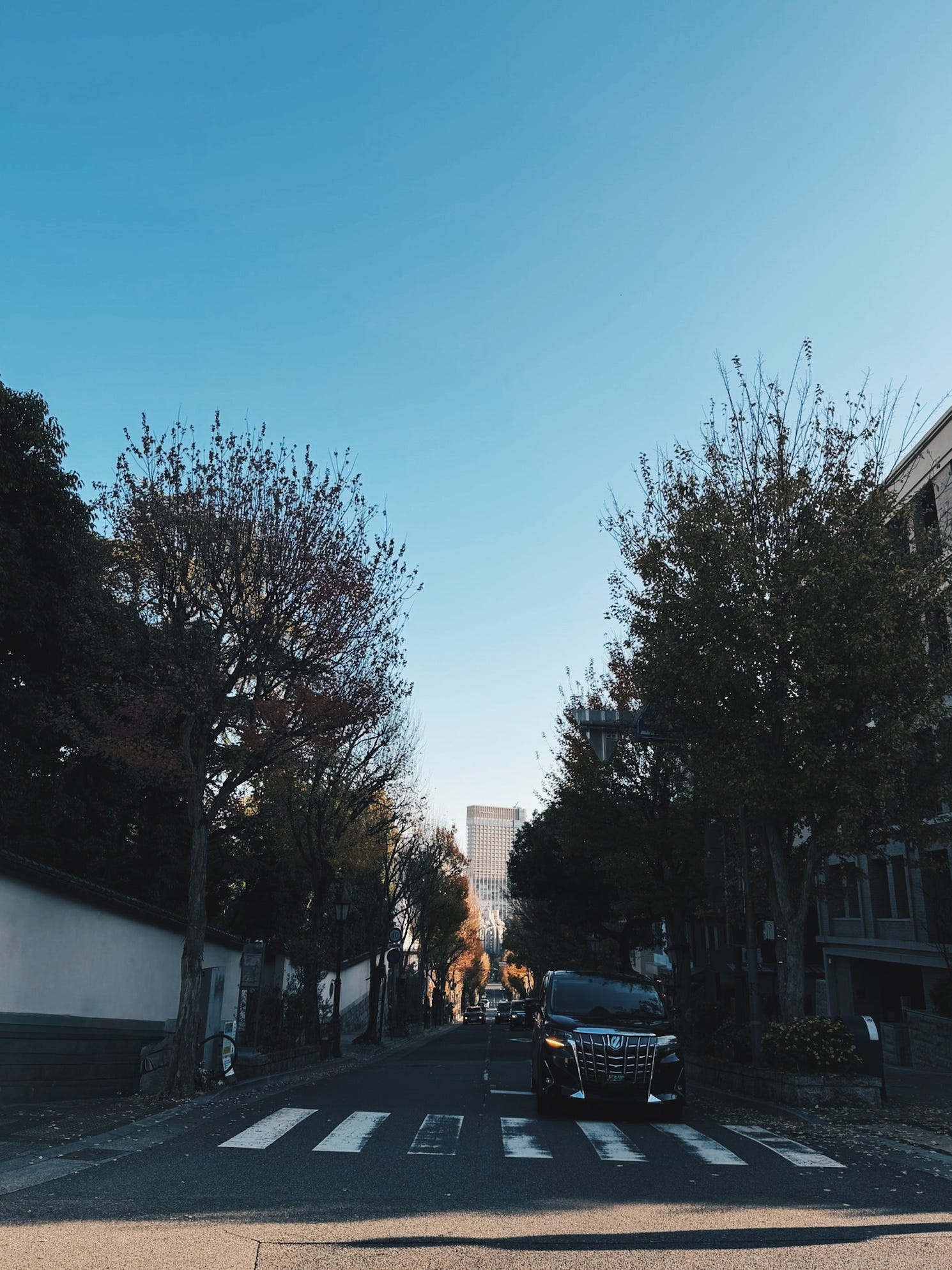
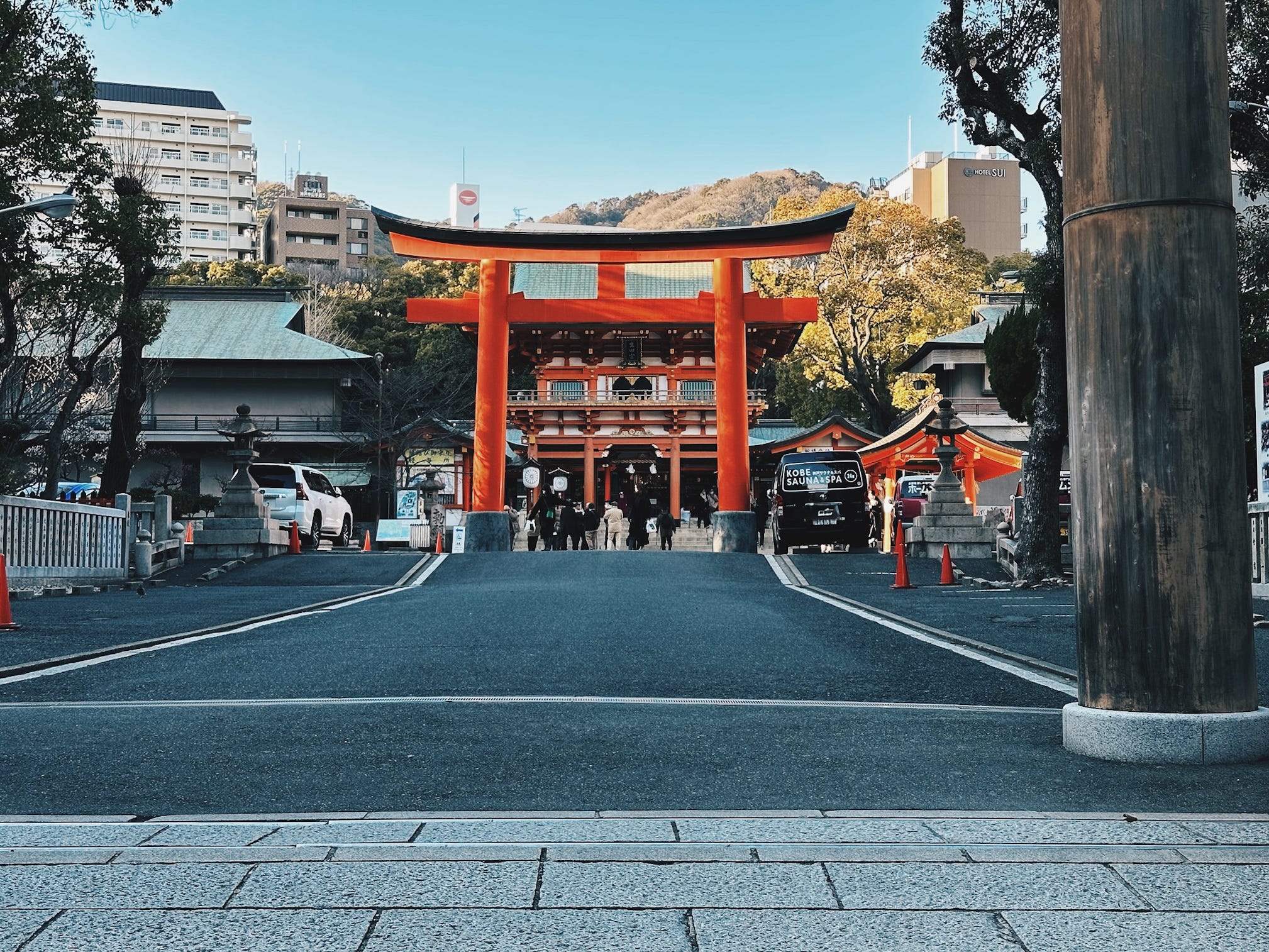
Kobe sits along a narrow strip between Mount Rokko and Osaka Bay, a city shaped by its geography and history. When Japan opened its first port to a foreign settlement, Kyukyoryuchi, to facilitate trade in 1868, merchants arrived to the Port of Kobe from Europe, the United States, and China. The settlement grew, establishing communities that still define the city’s character. Walk through Chinatown Nankinmachi’s Choanmon Gate at lunch, and the air smells of steamed buns. Climb the slope to Kitano, and Western-style houses with weathervanes and bay windows sit quietly along tree-lined boulevards, preserved relics of another century’s global ambitions.
The mixing persists in quieter ways now. A French-trained chocolatier opens a bakery serving millefeuille alongside terrine chocolat. Teppanyaki chefs sear Kobe beef over iron grills using Japanese technique and the Western influence of beef consumption. The city absorbed these influences without surrendering its Japanese foundation, creating a sophisticated yet unhurried city.
Shin-Oaska Station sits fifteen minutes east by bullet train. Kyoto’s temple crowds are thirty minutes north. Kobe quietly exhales to the west. Many visitors come primarily for beef before continuing elsewhere in Kansai, while the waterfront and hillside cafés become quieter beyond the central stops. Mount Rokko rises green behind the city. The harbor spreads silver-blue ahead, and the streetlights come on early under the mountain’s shadow, softening the wide-boulevards.
The Escape
I once treated Kobe as a day trip from Osaka: morning train in, afternoon walks through Nankinmachi’s Chinatown and Nada district’s sake breweries, A5 wagyu dinner at a teppanyaki counter, evening train out. Efficient but incomplete. The city deserves to be explored slowly, in the hour before dinner when light turns the harbor pink, in the morning when bakeries open and the smell of butter drifts uphill, in the neighborhood rhythms of daily life. It took two visits to understand this. Now I plan trips to Kansai around Kobe, not Osaka. Staying overnight shifts the experience from consumption to immersion.
The accommodations reflect the city’s character: international influences absorbed into Japanese hospitality, views that frame the geography that defines the city, and design that ranges from classical European to contemporary minimalism. Wake up to harbor light, mountain calm, or the bustle of Sannomiya’s city center.
The Return List
Places that merit deeper exploration on future visits because they require time or circumstance this trip didn’t allow.
Hotel La Suite Kobe Harborland
Anchors Kobe Harborland, a reclaimed waterfront district that was rebuilt after the Great Hanshin Earthquake of 1995, with suites overlooking the harbor. The design philosophy is restorative luxury: soaking tubs facing the water, private terraces with ocean views, and seating areas with enough space to spend a rainy afternoon reading. Rooms range from the muted neutrals, soft wood, and clean lines of modern Japanese style to the crystal chandeliers and upholstered rolled armchairs of traditional European aesthetic. The women-only spa includes carbonated springs and personalized treatments. For on-site dining choose French or Kobe beef teppanyaki, a reflection of the city’s unique influences. Request a suite that matches your personal preferences. All options are suites with harbor-views. Rooms from ¥30,960. Requires overnight evaluation to confirm whether grand aesthetics translate to contemporary comfort or simply photographs well in the lobby.
Kobe Bay Sheraton Hotel & Towers
Located next to the Kobe Fashion Museum on Rokko Island, a planned development in Osaka Bay connected to the mainland by bridge, the hotel offers what Western chains in Japan often skip: an onsen. The natural hot spring baths use mineral water from natural hot springs. The rooms face either the ocean or the city framed by Rokko mountain. The dining options mirror Kobe’s culinary landscape: a Chinese restaurant serving dim sum, a French tasting-menu restaurant, and a teppanyaki counter that overlooks the harbor. The island location means you are removed from the Sannomiya city center (twenty minutes by car or train), which creates a resort-like quietness. Ideal if you want the infrastructure and amenities of a large hotel with Japanese bathing culture included. Request a room facing Mount Rokko for city views without the hustle-and-bustle of staying in the city center. Rooms from ¥19,000. Needs proper stay to assess whether the cultural specificity of the amenities translates to the rooms.
Located in the heart of Sannomiya’s city center. The Orient, formerly known as The Oriental Hotel Kobe, was founded in 1870, shortly after the opening of the Port of Kobe to international trade, as one of Japan’s first Western-style hotels in the foreign settlement. It closed in 1995 after earthquake damage and reopened in 2010 with design that honors both its history and the port city’s dual heritage. The aesthetic leans maritime without tipping into theme. Nautical blue stripe accents in an otherwise muted neutral palette provides a subtle nod to Kobe’s position as a port city. Rooms feature spacious bathrooms with soaking tubs, a Nespresso machine and humidifier, and pillows made in Italy. The location in Sannomiya places you at the city’s central shopping and transit hub, walking distance to Nankinmachi, Kitanocho, and the waterfront. Ideal if you plan to explore on foot and want a base with historical resonance and modern comfort. The breakfast includes both Western and Japanese options, served in a dining room with ample natural light. Rooms from ¥22,500. Requires overnight evaluation to confirm whether historical prominence continues today.
The Table
Aburi Niku Kobo Wakkoku Shinkobe Ten
Teppanyaki was commercialized in Kobe, Japan in 1945, arising in the aftermath of World War II from the iron griddle cooking tradition and the Western-influence of beef consumption. Initially raised for agricultural work, cows were not traditionally a part of the largely Buddhist-based Japanese culinary culture until after Western influences began to permeate with the opening of the Port of Kobe. Nearby, the Tajima black cattle strain of the Hyogo prefecture were found to display a unique marbling, supporting the rise of Kobe beef teppanyaki.
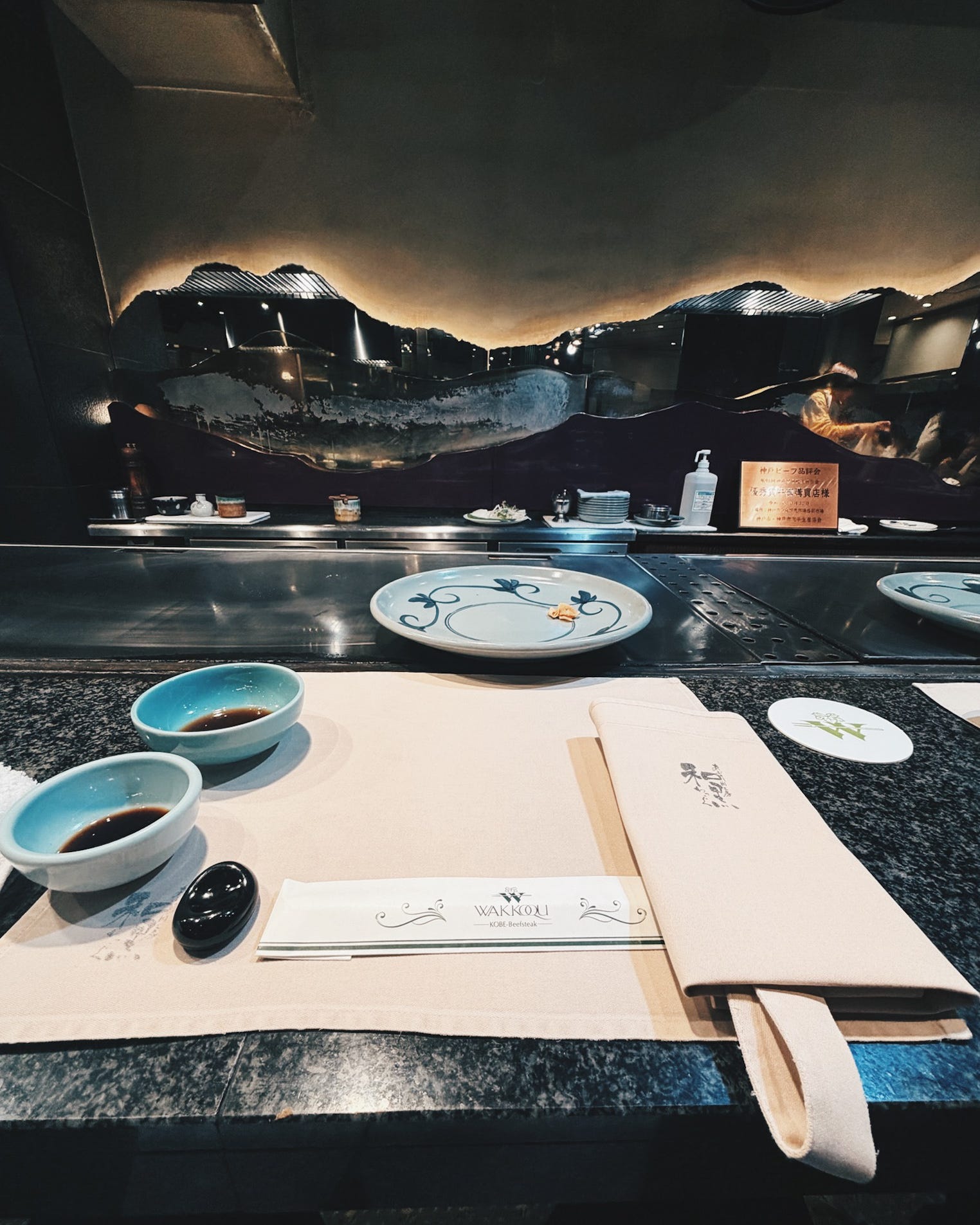
Aburi Niku Kobo Wakkoku Shinkobe Ten, also known as Wakkoqu, is a well-established formal Tajima beef teppanyaki restaurant in Kobe since 1988. The formality is clear before you sit down. Granite accents reflecting light, pressed linens, and the quiet precision of two chefs working in synchronized rhythm over separate grills. Nine seats face the teppanyaki counter in a room that manages to feel both grand and intimate, where the only sounds are sizzling beef, the click of tongs on metal, and the occasional murmured appreciation. This is the ceremony of Kobe wagyu. A5 marbling rendering in front of diners with fat crisping at the edges while the interior stays rose-pink and tender.
The course structure formalizes the experience without overpowering the wagyu. The meal begins with your choice of hors d’oeuvres followed by a soup and salad, dressed to wake your palate without overwhelming it. Then the wagyu: choose between sirloin or tenderloin based on your texture and fat distribution preference. Garlic rice follows, cooked in the beef fat remaining on the griddle, each grain separate and glossy. Dessert closes the meal, typically something light and fruit-focused. A light finish that cleanses. The pacing is deliberate, the portions substantial enough to satisfy without inducing heaviness. The atmosphere skews formal, a great option to celebrate an occasion, not where you drop in after work. Reservations do not typically require a long lead time. Kobe beef course at lunch and dinner from ¥18,450.
Kokobu
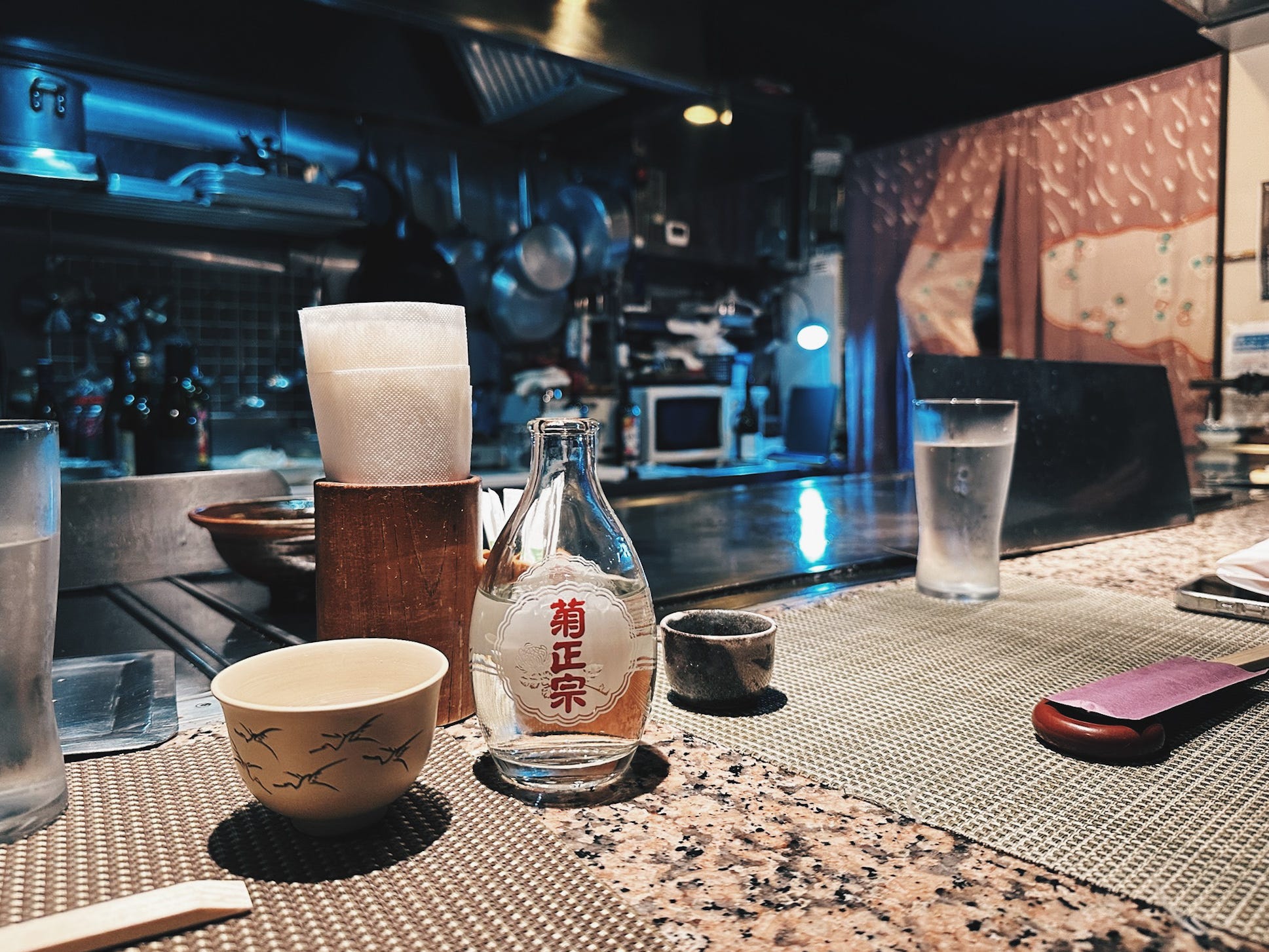
Kokobu sits in a small, dark room hidden on the second floor of the Sanmei building in the heart of Sannomiya. The room is stripped of pretense. Seven seats wrap around a single chef working over a teppanyaki griddle. Half of the patrons are regulars who greet him by name and maintain running conversation throughout the meal. There is no marble, no synchronized choreography, no course structure. Just A5 Kobe beef and the chef-owner’s hands moving with the ease of someone who has repeated this ritual for decades. The restaurant only established an online presence in the last two years, making discovery a matter of word-of-mouth until recently.
He slices, seasons minimally with salt, and sears quickly over high heat. The beef that arrives on your plate is glistening with caramelized edges and melts with each bite. Sometimes the chef pauses to chat, asking where you’re from or personally recommending sake from his modest selection. The meal concludes with garlic rice following the recipe of the chef’s mother. The chef’s familiarity with his regulars made the room feel personal. The lack of formality makes the quality of the beef more striking. There’s nothing to distract from the fact that the wagyu is flawless, and the preparation is confident. Reserve at least two days in advance, one week in advance for parties larger than two. Dinner only. Starting at ¥26,000.
L’Avenue
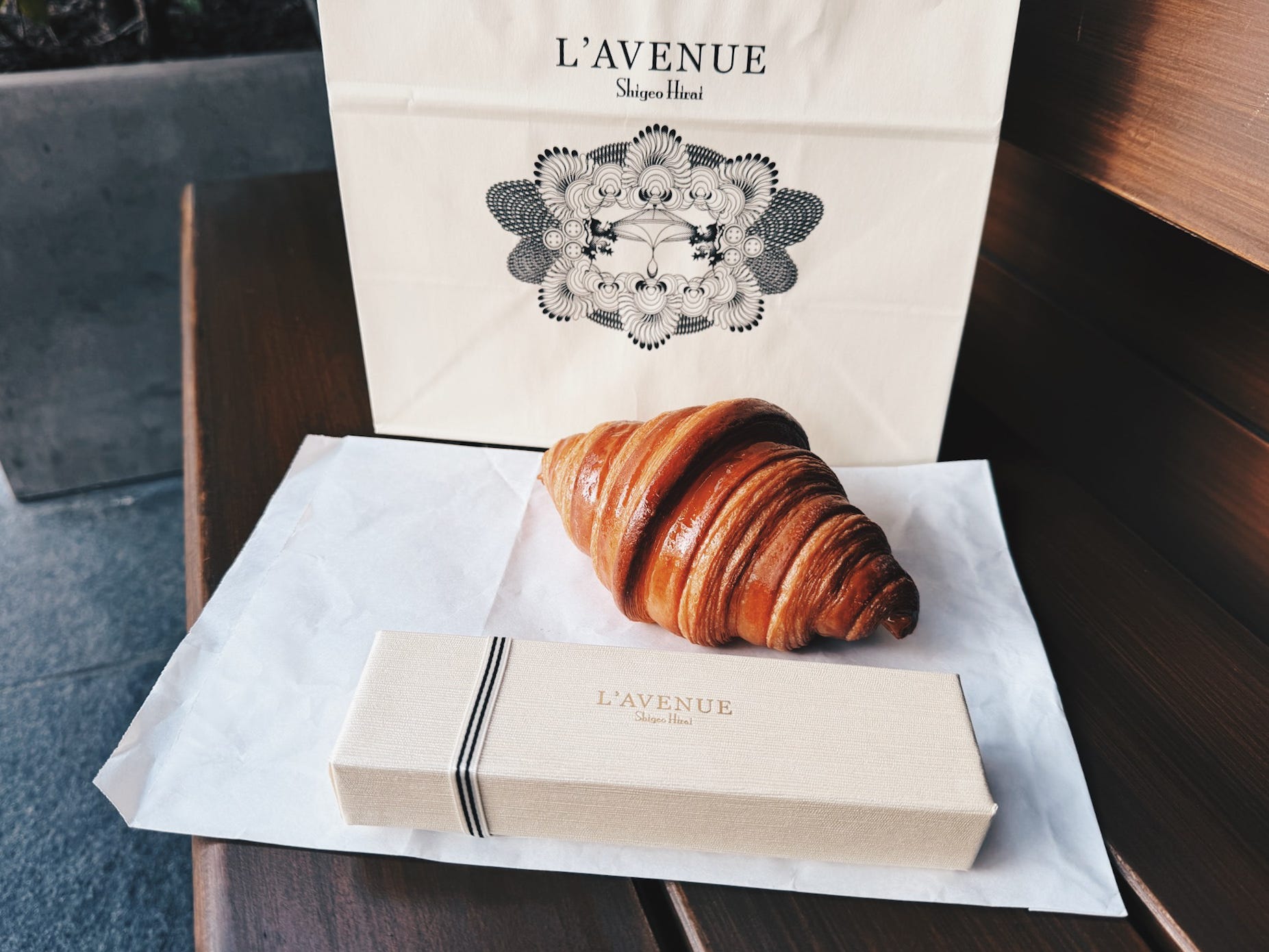
French-trained chocolatier Shigeo Hirai opened L’Avenue in Kitano in 2012, a compact shop producing bonbons and truffles with French technique. Recently, he expanded into L’Avenue bis around the corner, adding ice cream, crêpes, croissants, and cakes to the repertoire. The two locations sit one block apart on a quiet tree-lined street where European-style cafes and shops blend seamlessly into the neighborhood. The foot traffic is light and the aesthetic more European residential than Osaka commercial.
At the original location, glass cases now display pastries arranged by flavor profile: strawberry fraisiers, coffee-soaked tiramisu, citrus lumieres. The work is technical and refined, balancing sweetness with acidity, balancing French and Japanese influences without tipping into novelty. At bis, the bakery case holds morning pastries and the acclaimed chocolate selection: croissants with audible shatter when you bite through the layers, chocolates ranging from praline to pistachio. The ice cream and crepe selection is extensive. Both locations maintain the same elegant cafe atmosphere with neutral walls, minimal signage, and products speaking for themselves. There is minimal seating. Ideal for a mid-afternoon pastry break during Kitano exploration. Open daily except Thursdays. Chocolate sets from ¥1,620, Bakery items from ¥400.
The Return List
Reservations needing more time or circumstance than this trip allowed.
Chef Naoya Ueno’s Kappo concept, a more casual set-meal experience that centers on seasonal ingredients from both mountain and sea. Ingredients are sourced primarily from western Japan: Naniwa vegetables from nearby Osaka, fish from Lake Biwa (just east of Kyoto), wine from local Japanese vineyards, and sake from the nearby Nada district. The menu shifts based on what’s fresh at the market that day. Reservations required in advance, typically through hotel concierge. Lunch and Dinner from ¥13,000.
Owner Chef Noriyuki Kinoshita studied culinary art in Florence before opening this ingredient-focused concept in Sannomiya. Italian technique applied to ingredients from across Hyogo prefecture following the Japanese value of simplicity: rice from Himeji, fish from Akashi, produce from Awaji. This perfectly reflects Kobe’s character of international influences applied to Japanese structure. Reservations open on the 15th of the month, one month ahead. Tasting menu from ¥32,780.
Traditional sushi omakase experience focused on fish caught from around Awaji Island in Hyogo prefecture. Standouts from the prefecture include sea bream and the Matsuba crab. A simple space with an anchoring hinoki counter to focus on the fish itself. Only eight seats per night. Reservations are essential. As with most traditional omakase experiences in Japan, perfume is not advisable. Reserve at least two months in advance with lunch reservations easier to come by than dinner. Omakase from ¥31,000.
The Edit
Kobe Shushinkan Sake Brewery
Kobe sits adjacent to Nada, Japan’s largest sake-producing region, where cold water flowing down from Mount Rokko meets mineral-rich groundwater ideal for brewing. Sake has been a staple of Japanese culture for centuries with the earliest records dating back to around 300 BC. Initially used in religious contexts.
The Nada district produces roughly one-third of Japan’s total sake output, a concentration driven by Edo-period infrastructure: access to shipping routes via the Port of Kobe and the miyamizu water from the subterranean river flowing from Mount Rokko, producing exceptionally clean, structured sake. Fukuju, brewed here since 1751, earned international recognition when it was served at the 2008 Nobel Prize banquet, a validation of quality that carries weight beyond marketing.
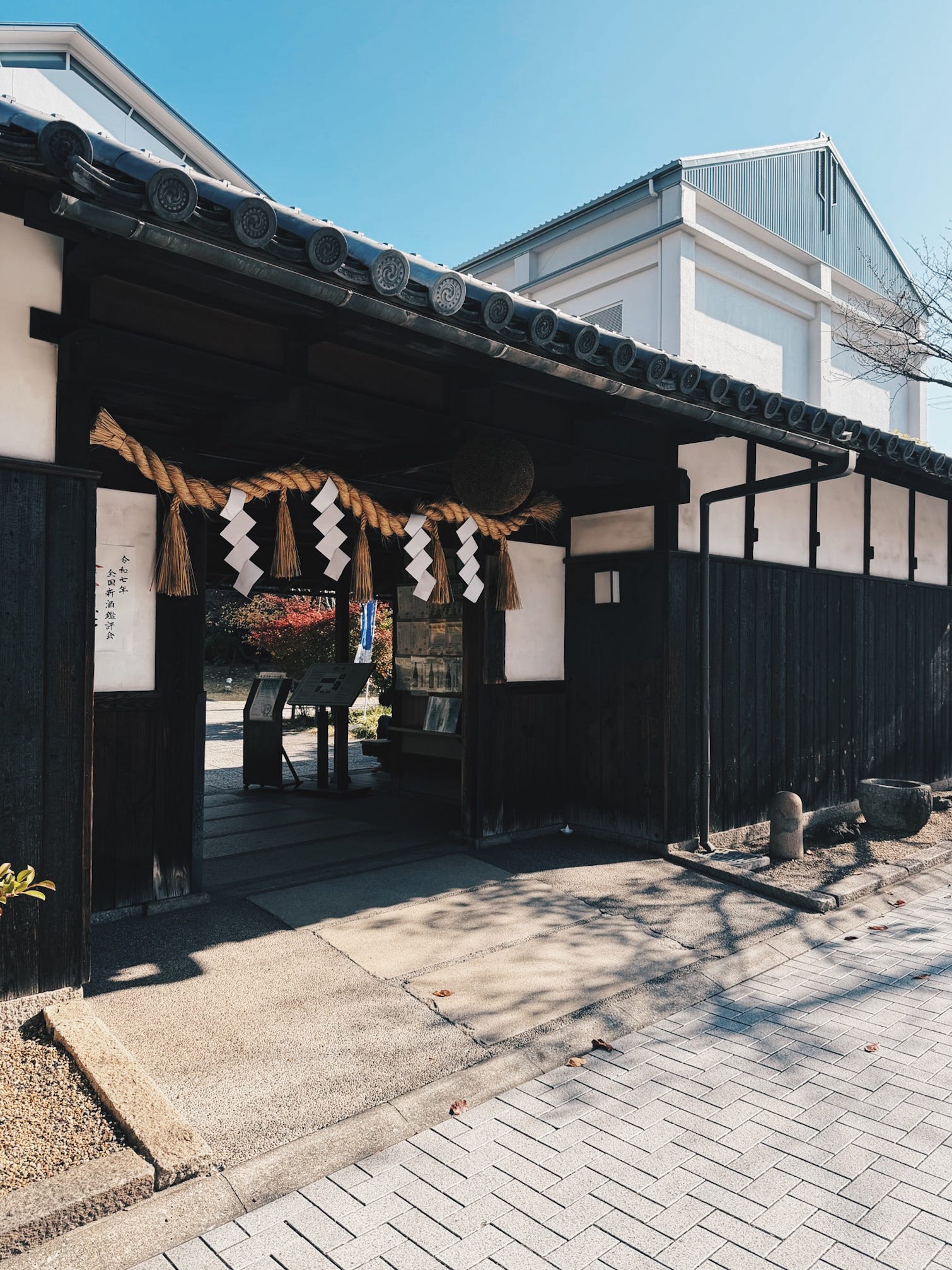
Kobe Shushinkan functions as both brewery and tasting room, occupying a traditional building with dark wood beams and stone floors that stay cool even in summer. The entry leads to a small museum displaying antique brewing equipment with explanatory panels in Japanese and English detailing the brewing process and Nada’s historical significance. Beyond the museum, the tasting room offers flights arranged by rice polishing ratio, flavor profile, or seasonal release. Staff guide you through the progression, explaining how polishing percentage affects clarity and aroma, why certain sakes pair with specific foods, and what to look for when evaluating quality. Personalize the tasting experience based on your preference.
The brewery functions as both a visitor destination and an everyday retail space, with guided groups moving through beside customers selecting bottles to take home. The gift shop stocks Fukuju across multiple grades, from affordable junmai for daily drinking to daiginjo reserved for special occasions, plus limited bottlings available only at this location. Sake-infused ice cream is sold near the entrance, a novelty that works better than expected, the alcohol cutting through the cream’s richness. Open daily. Free entry. Basic tastings included. Small charge for premium daiginjo selections.
The Return List
Shops and showrooms that merit dedicated visits on future trips.
Multi-brewery tasting room representing the five major Nada districts (Nishigo, Mikagego, Uozakigo, Nishinomiyago and Imazugo) covering 26 sake breweries under one roof. Allows broader comparison across breweries if you have limited time. Sake pairings with seasonal snacks are also available for reservation.
Opened at the end of November 2024, the new outpost of Japanese clothing brand, visvm, is situated in a pre-war bank building from 1938 in the former foreign settlement in Sannomiya with original features still present in the interior and exterior. The decor is minimal with a focus on the clothing. This location carries both the menswear and womenswear. Think Japanese denim and silk jackets with a focus on the craft of clothing.
Local Japan-made shoe store located in Kitanocho. The shop specializes in using a proprietary 3D mid sole design to create shoes that adapt to foot movement for maximum comfort. They also specialize in shoes made with Bologna Construction, originating from Bologna, Italy in the early 1900s, creating shoes that fit like a glove. The result are shoes that support the Japanese culture of walking as a mode of transportation.
On Planning
Kobe is best experienced as a long weekend to understand its evolution.
For those familiar with Kobe what deserves deeper coverage on a return visit?
Next Issue: Volume I Issue 08: Nara & Uji. Arrives Sunday, February 22, 2026.
Notes on all prices in Japanese yen. Approximately ¥150 = $1 USD.
Eature is written for those who care about where they stay, why a place feels the way it does, and how travel fits into a life well-lived.
New here? Read about how Eature works
More Eature Guides: Tokyo | Kyoto | Osaka | Kobe | Nara & Uji | Chicago | Denver | Orange County