
VOL. I, ISSUE 5
The Note
Northern Osaka begins in quiet tranquility. Moving south along the Midosuji subway line brings more crowds with each stop. Shin-Osaka’s quiet residential streets, Nakatsu’s business district with hidden cafés along the Yodo River, Umeda’s glass and steel grandeur rising around new parkland, Hommachi’s glistening boulevards lined with design shops and fine dining, until you reach the noise of Shinsaibashi and Namba, where neon reflects off the Dotonbori canal, and tourists crowd takoyaki counters.
From north to south, clean minimal high-rises tower over neighboring Kansai cities, a testament to Osaka’s evolution from Edo-period merchant hub to cosmopolitan epicenter. Despite the changing atmosphere, the smell of frying oil follows you through every district, clinging to your clothes, drifting from alley kitchens and street-side griddles, so you never forget that this is Tenka no Daidokoro, the Kitchen of the Nation.
The title stems from geography and pragmatism. Osaka’s central location among inland water networks during the Edo period made it ideal for collecting and redistributing food across Japan. Rice used for taxes, seaweed from Hokkaido, produce from surrounding provinces. Nearby Sakai supplied the knives that prepared it all. The merchant class grew wealthy facilitating this trade, developing serious dining traditions for business entertaining.
But the dockworkers and craftsmen also needed to eat quickly and cheaply, standing at griddles between shifts. Takoyaki, okonomiyaki, and kushikatsu. Osaka’s street food culture emerged from economic necessity and became a cultural identity. The duality remains. La Cime’s fourteen-course omakase and Kukuru’s takoyaki thrive in the same city and represent the same philosophy. Food as craft, whether the canvas is hand-crafted ceramic or a paper boat.
The Escape
The city’s culinary depth, artisan workshops, and neighborhood rhythms require three to five days for the full experience. An hour from Kyoto by train, with luggage transport between cities requiring nothing more than a morning hotel pickup, there’s no reason to compress Osaka into frantic day-trip touring, when it’s better served by slow observation.
Two neighborhoods anchor extended stays, each representing different facets of contemporary Osaka.
Umeda: Where Urban Modernism Meets Designed Greenery
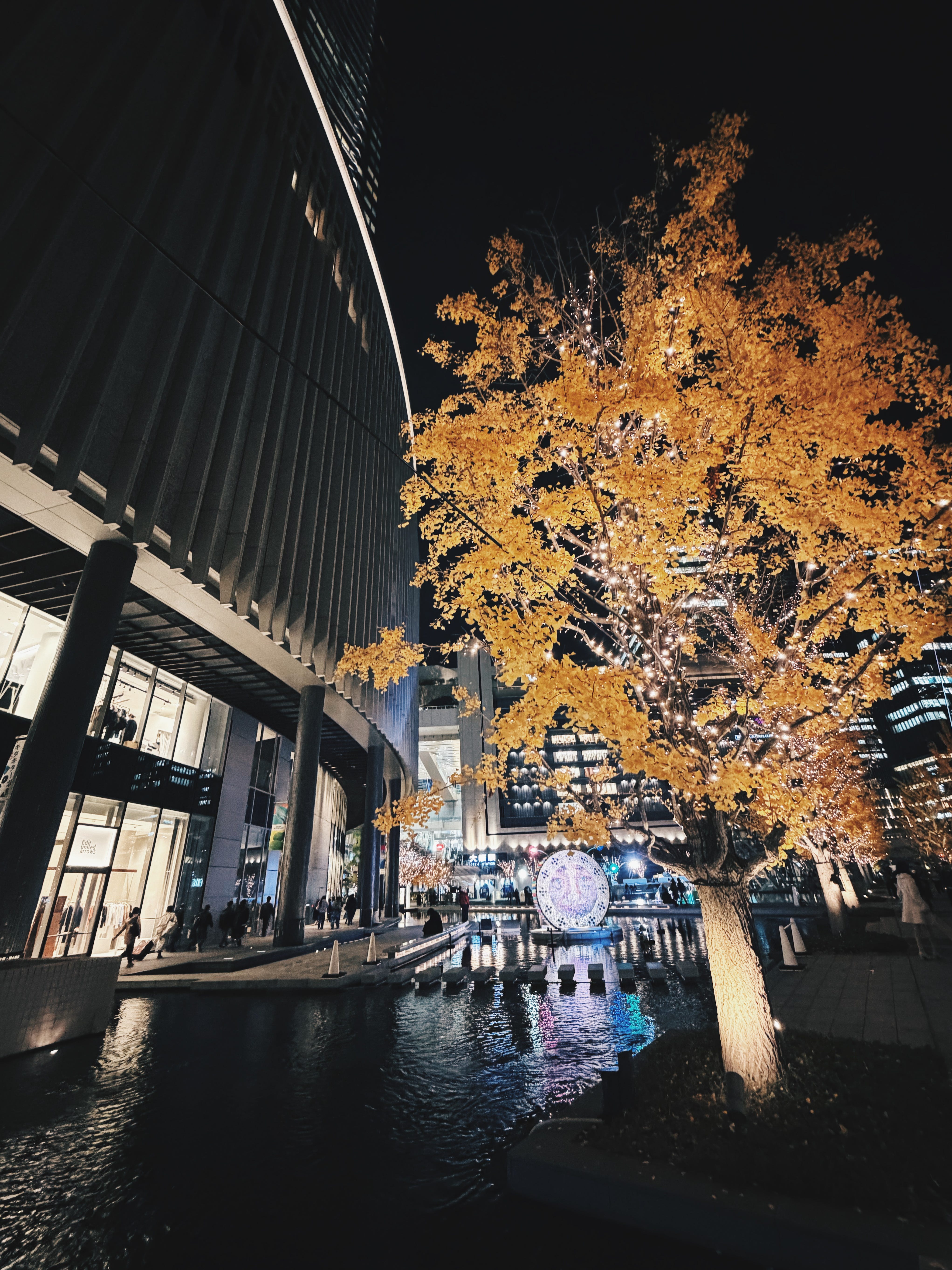
Interconnected high-rises of glass and steel now interweave with something unexpected: an expanding urban park. Grand Green Osaka, a multi-use development opening in phases through 2027, is transforming the district from pure commercial into thriving urban life. Office workers eat lunch under one of 320 different tree species, and residential towers overlook curated green corridors rather than concrete and traffic. Umeda is still home to serious shopping. Hankyu’s international luxury floors and the locally-respected vintage dealers (Brand Off, Komehyo, Aura) with new luxury properties rising as the development takes hold.
The energy is shifting. Morning joggers circle Umekita Park. Evening crowds gather at the park’s cafés. Osaka is embracing green space to match its merchant history and ambitious future. Urbanism respecting its roots and evolving in real time.
Shin-Osaka: Residential Quiet North of the Yodo River
Head north across the Yodo River from tourist-dense Dotonbori, and the city quiets. Shin-Osaka is a primarily business and residential neighborhood.
I stayed at the Courtyard Shin-Osaka Station, which delivers on logistics with a direct connection to Shin-Osaka Station (a major JR hub) and efficient access to central Osaka, Kyoto, and Kobe. The concierge lounge is well-stocked with an open bar, local cuisine, and window-seating that overlooks the neighborhood’s business and residential sprawl. It doesn’t deliver the architectural significance or design sensibility that defines an Eature recommendation. Functional but not transformative.
The neighborhood offers evening walks through small izakayas and local grocery stores. Not compelling enough to prioritize over Umeda’s design evolution, unless residential quiet matters more to you than urban energy.
The Return List
Places that merit deeper exploration on future visits, either because they require time, season, or circumstance this trip didn’t allow.
Opened April 2025 in the heart of Umeda, adjacent to Umekita Park. As Grand Green Osaka reaches full completion in 2027, this property will anchor the district’s transformation from pure commerce to designed urban living. The property promises Umeda Sky’s elevated city views without the Sky Building’s tourist density. The same panorama, none of the crowds, and interiors that embrace Osaka’s modernist energy. Worth evaluation once the full park development creates the neighborhood context the property deserves.
Opened 2024, less than fifteen minutes’ walk from Umekita Park, with direct access to the JR Osaka Station. Warm wood, clean lines, natural light. The design references Japanese minimalism with cosmopolitan ease, confidently contemporary Osakan hospitality. Requires overnight evaluation to confirm whether this meets Eature’s standard or simply photographs well in the lobby.
The Table
La Cime
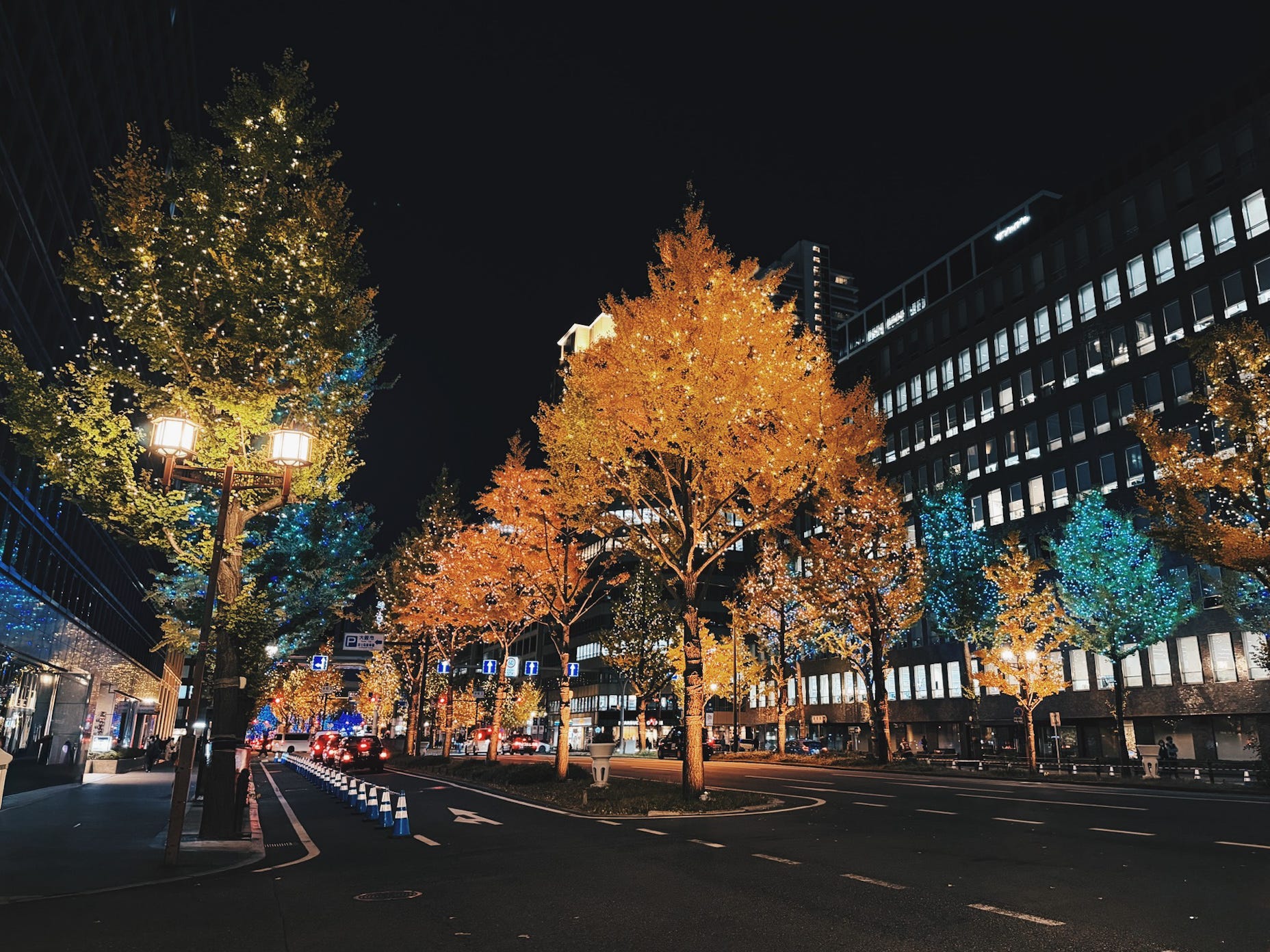
Hommachi’s wide boulevards are lined with ginkgo trees that turn gold in November and illuminate winter evenings with string lights wrapped around their trunks. La Cime sits mid-block in this design-forward business district, easy to miss if you’re not looking. Subtly elegant gray stone facade, monochromatic lettering, and no menu posted.
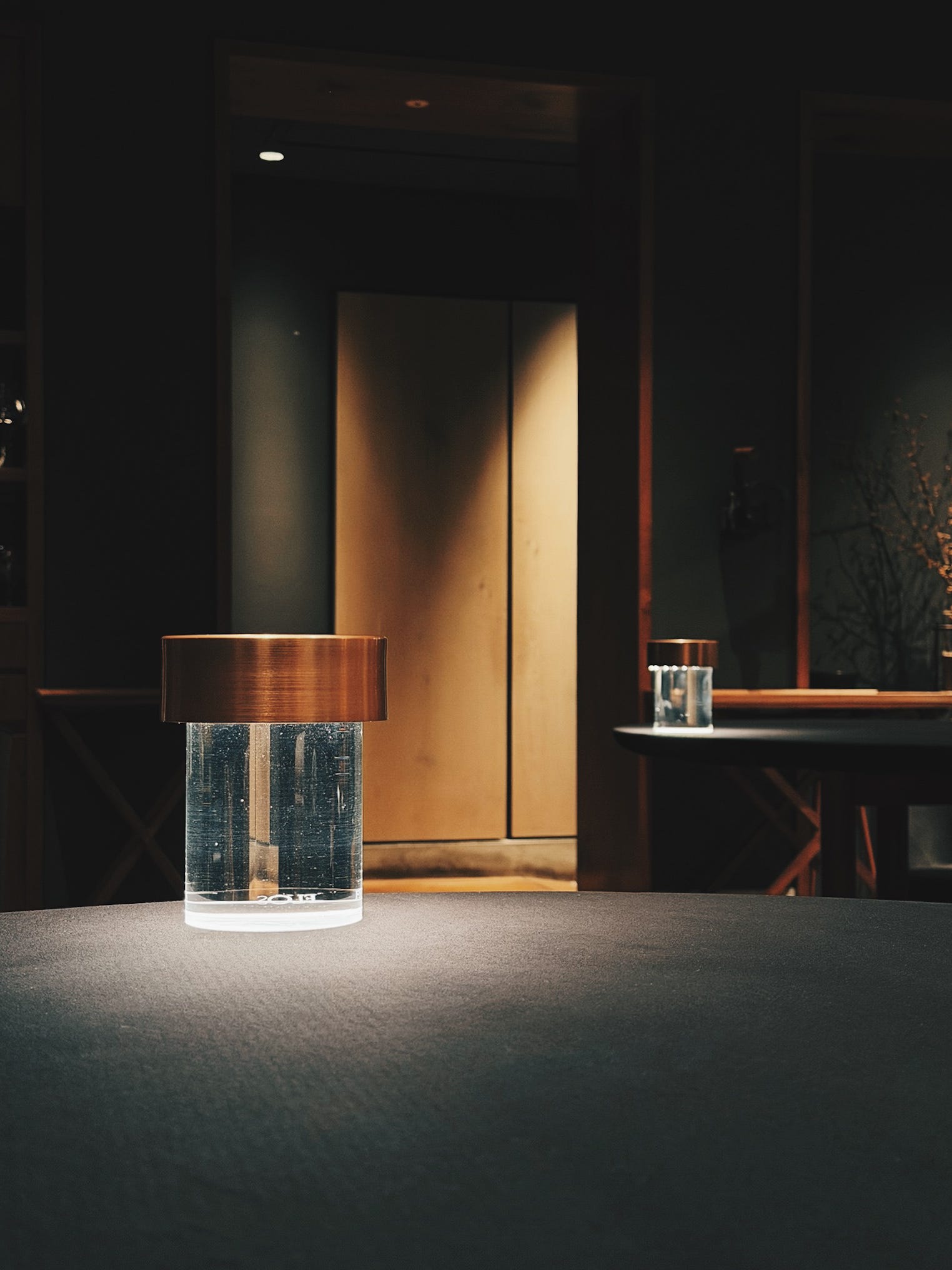
Staff await your arrival at the entrance before the single seating began. The welcome established the restaurant’s precise pacing upon arrival. You’re escorted into an intimate dining room with six tables, each spotlit like a stage. The lighting deliberately focused on the dishes. The tableware is smooth ceramic in whites and grays, a complement to the food placed upon them. The interior is modern Japanese with clean lines, everything intentional. Your attention belongs on the food.
The experience begins with Chef Yusuke Takada’s signature amuse-bouche: The Boudin Dog. It has the appearance of a smooth, tranquil gray stone set among real stones arranged on the plate, a playful nod to the restaurant’s aesthetic. The bite itself is a perfect balance of umami and textural crunch, an artisanal twist on a corn dog that makes you smile. This is fine dining that doesn’t take itself too seriously, inviting both delight and reverence.
The progression flows through five amuse-bouches, four appetizers, two mains, two desserts, finishing with confections and your choice from a selection of teas. The creativity compounds with each course. Japanese sweet pepper stuffed with Hokkaido crab and topped with spinach, shaped to appear like a traditional red chili. Succulent unagi draped in seasonal leaves. Each dish is a small puzzle. What appears to be one thing transforms itself into another. The texture and flavor playing against visual expectation.
The beverage pairings warrant serious consideration. The nonalcoholic pairing, in particular, demonstrates the same creative philosophy as the food. One tea is prepared to look and taste like red wine. The color, body, and tannin are all present without a drop of alcohol. Barley tea mixed with soy sauce delivers notes of whiskey. Smoky, slightly sweet, and warming. The wine and sake pairings feel more conventional by comparison, well-executed but predictable. If you view dining as art, choose the creative option. If you prefer traditional luxury, the wine pairing won’t disappoint.
Courses from ¥35,200. Book via MyConcierge two months in advance.
Life Central Square Nishimiyahara Shop
At the opposite end of Osaka’s food spectrum sits Life Central Square, a Japanese grocery chain with a floor dedicated to freshly prepared sashimi and nigiri. This is where neighborhood families and salarymen shop for dinner after work. There are a handful of locations throughout the Kansai and Kanto regions, but the Nishimiyahara location stands out for its fish variety and quality.
Arrive after 6 PM to feel the rhythm of everyday Osaka life. Office workers in suits choosing between tuna and mackerel, mothers with small children negotiating what fish is acceptable tonight, and elderly couples splitting a packaged chirashi bowl. The fish quality exceeds trending conveyor belt sushi chains.
The otoro melts before you can chew it. The ikura pops with brine. Purchase a selection, bring it back to your hotel, and eat at your own pace. The prepared-food floor offered a useful look at how an ordinary neighborhood supermarket approaches an evening meal.
Located a 10 minute walk from the Shin-Osaka station, accessible via the Midosuji Line. Open until midnight, but the best quality fish won’t last past 8 PM.
The Dotonbori Classics
Takoyaki, okonomiyaki, and crab have become Osaka’s social media shorthand. These are the dishes that define the city in tourist imagination. Their popularity is understandable. The dishes are closely tied to Osaka’s culinary history and remain worthwhile for a first visit. But the experience matters as much as the food itself, and Dotonbori’s tourist-dense chaos obscures what makes these dishes significant. Here is an option to approach them beyond Dotonbori’s busiest counters.
Takoyaki at Kukuru
Takoyaki was invented in Osaka during the Showa era. Wheat flour batter, diced octopus, pickled ginger, cooked in specialized molded pans and topped with takoyaki sauce and bonito flakes that dance from the residual heat. Street food that emerged from the same post-war economy that birthed okonomiyaki. Cheap, filling, fast, and designed to be eaten while standing.
Kukuru’s takoyaki traces its roots to 1985 and now has expanded throughout Osaka. The Dotonbori flagship can have an hour-long line. Three Shin-Osaka Station locations serve the same takoyaki with considerably less waiting, making them especially practical before an evening train. The food is identical, but the pace is not.
Order from one of the station counters. Watch the cook turn each ball with practiced speed. The paper boat arrives warm, sauce glistening, bonito flakes dancing from the heat. Carry them to the platform bench or eat at one of Kukuru’s tables in the Eki Marché outpost. At the station, the dish returns to its original strength. Hot, fast, inexpensive, and easy to finish before the next train.
Okonomiyaki at Mizuno
The roots of okonomiyaki trace to funoyaki, a Buddhist temple confection during the Edo period. Through the Meiji era, variations emerged. The first modern okonomiyaki appeared in 1930s Osaka, gaining popularity during post-World War II rice shortages when cabbage and flour became filling substitutes. The dish evolved differently in Hiroshima during the same period, layered like a crepe rather than the Osakan pancake, creating distinct regional styles that exist today. Osaka’s version is fluffier. The ingredients are folded together before cooking rather than stacked.
Mizuno opened in the 1940s during this post-war evolution, making it one of the city’s oldest okonomiyaki institutions. The family has operated continuously since, surviving Dotonbori’s transformation from local dining district to international tourist destination. The location reflects that history. Embedded in the heart of Dotonbori’s chaos due to timing, opening when the neighborhood was still primarily local.
The restaurant itself is intimate to the point of cramped. A small metal counter surrounding the griddle, seating no more than ten. You watch the chefs combine cabbage, flour, seafood, and egg into what becomes an umami custard pancake. The batter hitting the hot griddle with a hiss, the cabbage steaming, the scent of frying dough wafting through the space. The interior is simple, utilitarian. You’re there for the food and to witness Osaka’s food history in real time.
No reservations accepted. The line results from the intimate space and institutional reputation. The restaurant draws a mix of diners because of its history, reputation, and intimate size. Arrive mid-afternoon, midweek for the shortest wait. Order the Mizuno-yaki, their signature mixed seafood okonomiyaki. Watch it cook. Eat it hot off the griddle with the metal spatula they provide. This is not refined dining. It’s cultural education served on a hot plate.
Kani Doraku
Kani Doraku opened in Dotonbori in the 1960s with a singular focus: crab and all of its possible preparations. The flagship’s giant mechanized crab sign quickly became one of Osaka’s most recognizable landmarks, a visual symbol of the city’s claim as Tenka no Daidokoro. Since then, the restaurant has expanded across Japan, but the original Dotonbori location remains iconic.
Most visitors experience only the ground floor spectacle. Mechanized legs animating above, tourists posing beneath, street-level chaos at the takeaway counter. The energy is frantic.
The upper floors offer something different. Tranquil omakase overlooking the Dotonbori canal. No crowds, slower pace, windows framing the chaos below while you remain removed from it. Menus range from lighter courses (¥3,400) to comprehensive progressions (¥20,000+), all following the same philosophy: studying crab through systematic preparation.
Crab sashimi arrives barely chilled, sweet, and delicate. Crab shabu-shabu simmers at the table, the broth building from clear to deeply savory as each piece cooks. Crab tempura balances succulent interior with crunchy exterior, batter so thin it shatters rather than crumbles. Depending on the menu, grilled crab legs where caramelization adds depth, crab sushi where vinegared rice provides balance, or crab porridge concentrating everything into a final savory bowl.
It’s systematic study, not innovation. Same ingredient with different techniques. The window seating shows Dotonbori’s neon chaos below while you study crab preparations in calm refinement. Tranquility in the middle of Osaka’s most frenetic dining district.
Reservations via the restaurant’s official website. Request window seating. Reserve for 3 PM or 4 PM for the calmest atmosphere before evening crowds, and observe as the transition from daylight to neon mirrors the duality of the experience itself.
The Return List:
Reservations needing more lead time, luck, or local assistance than this trip allowed.
Chef Ko Ishikawa’s intimate eleven seat omakase counter in a residential Tennoji follows the traditional omakase model. There’s a single seating for lunch and dinner, and the seasonal progression is dictated by that morning’s Tsuruhashi market selection. The reputation is for pure sushi, impeccable fish, and perfectly seasoned rice without theatrics.
Reserve via MyConcierge six months in advance or request hotel concierge assistance. First-time foreign visitors face the familiar Tokyo problem as slots disappear without sufficient lead time. Lunch seatings may offer slightly better availability than dinner.
Counter seating only. Courses from ¥22,000. Smart casual attire. As with most omakase in Japan, avoid cologne or perfume. The subtle aromatics of the fish are a part of the experience.
Chef Yukihiko Tsuchisaka’s kaiseki and tempura twelve-seat counter occupies a renovated machiya in residential Esaka, two stops north of Shin-Osaka station. The idea is a tempura course that incorporates traditionally formal kaiseki into a more accessible meal. Ingredients are seasonal and sourced from individual local vendors.
Reserve through hotel concierge or MyConcierge at least two months in advance. A four-to-six-seat private room is available for those preferring more intimate dining.
Courses from ¥35,000. Smart casual attire.
The Edit
Jikko Cutlery
Sakai’s knife-making traces to the Kofun and Edo periods when iron forging techniques used for ancient burial mounds evolved into sword crafting during with the rise of the samurai. Today, Sakai remains Japan’s knife-making center for forging, sharpening, and handle-fitting.
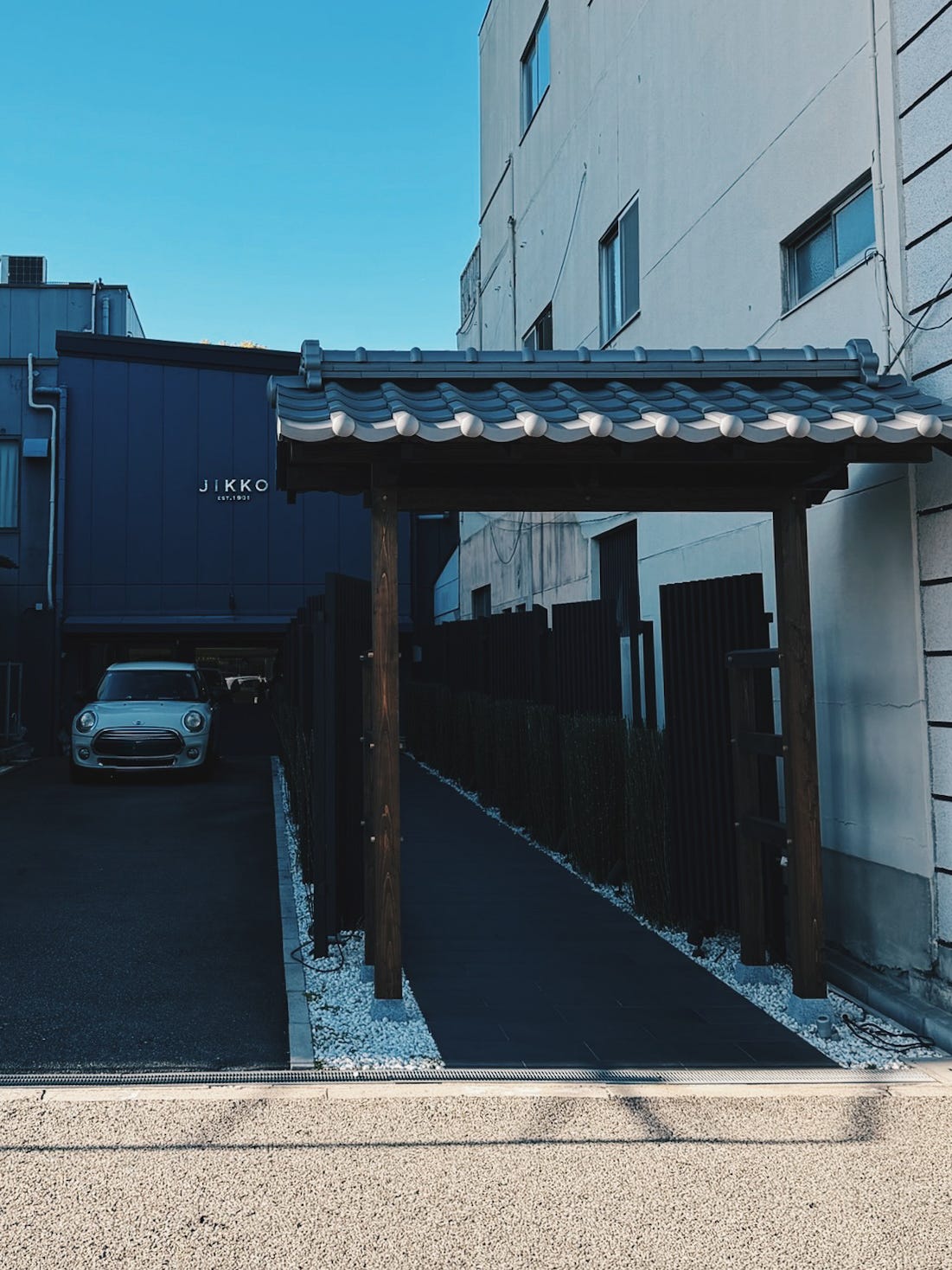
Jikko originated in Sakai in 1891 and has since spread across Japan. Despite its growth, the original Sakai location maintains the craft tradition. Located at the edge of Sakai’s cluster of knife shops, the calm grey-blue facade contrasts the interior’s historical continuity.
The first floor is the workshop. Watch the forging process through the glass if craftsmen are working. The rhythmic hammer striking, and the smell of heating steel filling the workshop. Narrow stairs lead to the second-floor shop, which houses a wider range of Jikko products than the nearby Sakai Traditional Crafts Museum or other Jikko locations. The staff understand both technical specifications (steel composition, hardness ratings, edge retention) and practical applications (which blade works for which cutting technique, which handle weight balances which blade length).
The customization capability is what separates this location from retail displays. Like a blade but prefer a different handle style? They can modify it in the workshop downstairs. Want a personalized engraving? They accommodate. The ability to modify a knife in the workshop downstairs made the relationship between production, retail, and customization unusually visible.
I found the perfect blade. A unique bread knife with a pointed edge rather than the standard Western curved serration. The handle, however, was bulkier than I wanted, functional but not elegant. They offered to fit a Japanese wa-handle to the bread knife blade, an unusual pairing that required consulting with the workshop downstairs to ensure proper balance. Twenty minutes later, I collected a knife that didn’t exist in any catalog. My specific vision of what a bread knife should be, executed with the precision Sakai has applied to blades for 600 years.
Open 10AM - 6PM Tuesday - Friday, 10AM - 4PM Saturdays. Closed Sundays and holidays.
Yayoi Kusama at Espace Louis Vuitton Osaka
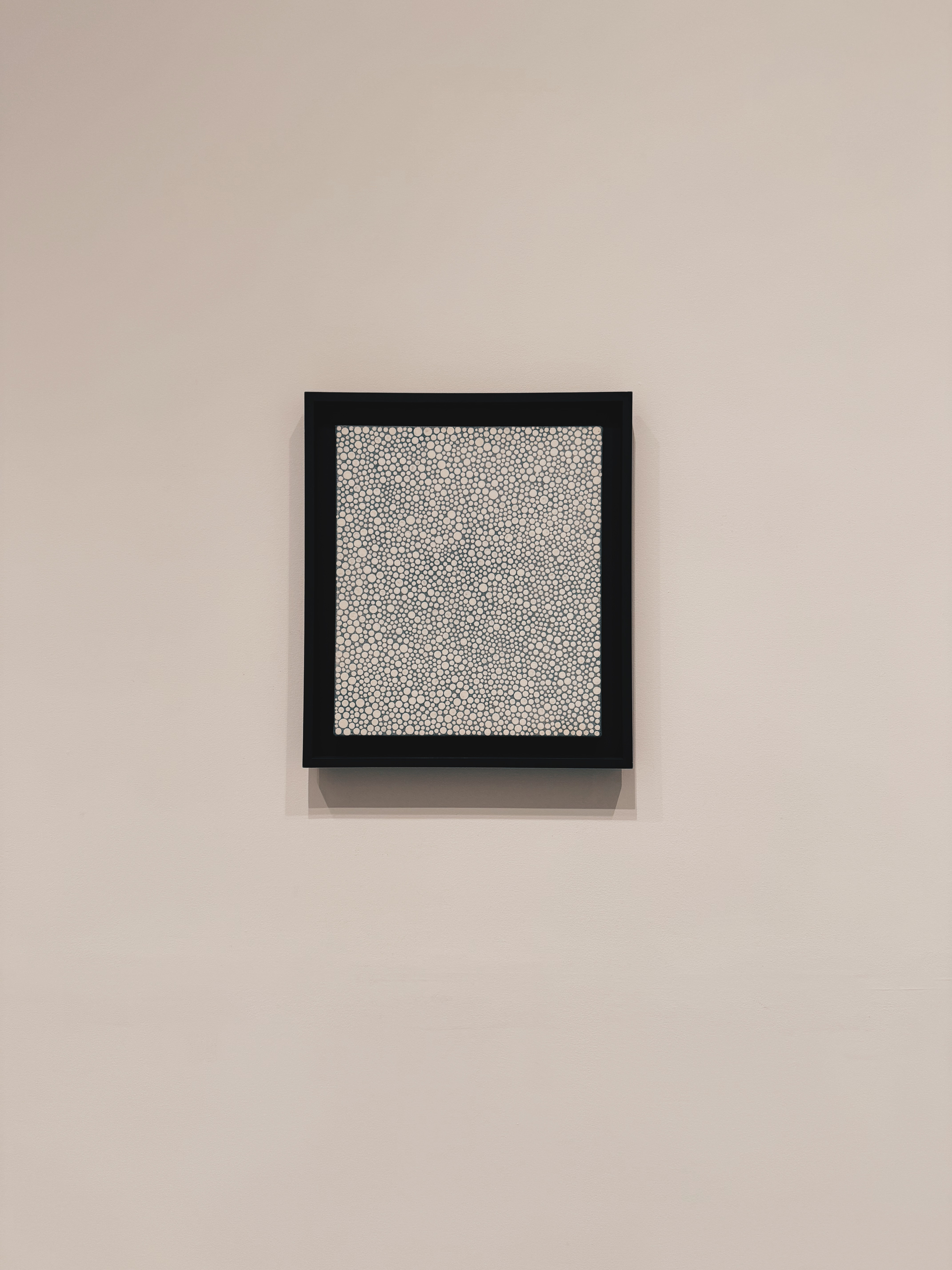
Hidden in Shinsaibashi’s shopping frenzy sits one of Osaka’s quietest art experiences. On the side of Louis Vuitton Shinsaibashi, an unmarked elevator ascends to Espace Louis Vuitton. Currently on view is Yayoi Kusama Infinity (through January 12, 2026). Dots on canvas and the star of the curation, the Infinity Mirror Room-Phalli’s Field, 1965.
The staff seem perpetually surprised when international guests arrive. Most shoppers never venture beyond the ground floor boutique. When I visited on a Monday afternoon, five Japanese visitors moved quietly through the gallery. No lines and no tourist chaos from the shopping district below.
The installation changes periodically. Jeff Koons: Paintings and Banality opens February 20, 2026. Check the Espace Louis Vuitton website before visiting to confirm current programming.
Editor’s Note: For those traveling through Tokyo, Andy Warhol Serial Portraits is on view at Espace Louis Vuitton Tokyo through February 15, 2026.
The Return List:
Shops and showrooms that merit dedicated visits on future trips. Either closed during this visit or requiring more time than the itinerary allowed.
Wailea operates as both an interior design consultancy and curated home goods showroom, focusing on kitchens and bathrooms. The Osaka showroom (one of several across Japan) sits in a business district, away from tourist shops. The showroom was closed when I visited on a Friday evening. The window display alone, curved glass and ceramics in natural tones, suggested that the curation inside warrants a dedicated visit.
11AM - 7PM daily.
Aura is a curated vintage boutique with five main locations across Osaka, each focused on a different fashion capital. Aura Paris Vintage, Aura Milano Vintage, Aura London Vintage, Aura New York Vintage, in addition to the flagship Aura Vintage store.
The curation is significantly more selective than Komehyo’s volume-driven approach or Brand Off’s tourist-friendly accessibility. Less crowded than Shinsaibashi’s vintage concentrations, more sophisticated in merchandising than typical resale shops. Not just “vintage fashion” but vintage as if curated through the lens of each city’s particular aesthetic. The Paris location feels Parisian, the Milano location feels Italian, not just in inventory but in atmosphere.
Multiple locations throughout Osaka. 12PM - 7PM daily.
Next Issue: Volume I Issue 06: Denver. Arrives Sunday, January 25, 2026.
Notes on all prices in Japanese yen. Approximately ¥150 = $1 USD.
Eature is written for those who care about where they stay, why a place feels the way it does, and how travel fits into a life well-lived.
New here? Read about how Eature works
More Eature Guides: Tokyo | Kyoto | Osaka | Kobe | Nara & Uji | Chicago | Denver | Orange County