
VOL. I, ISSUE 9
The Note
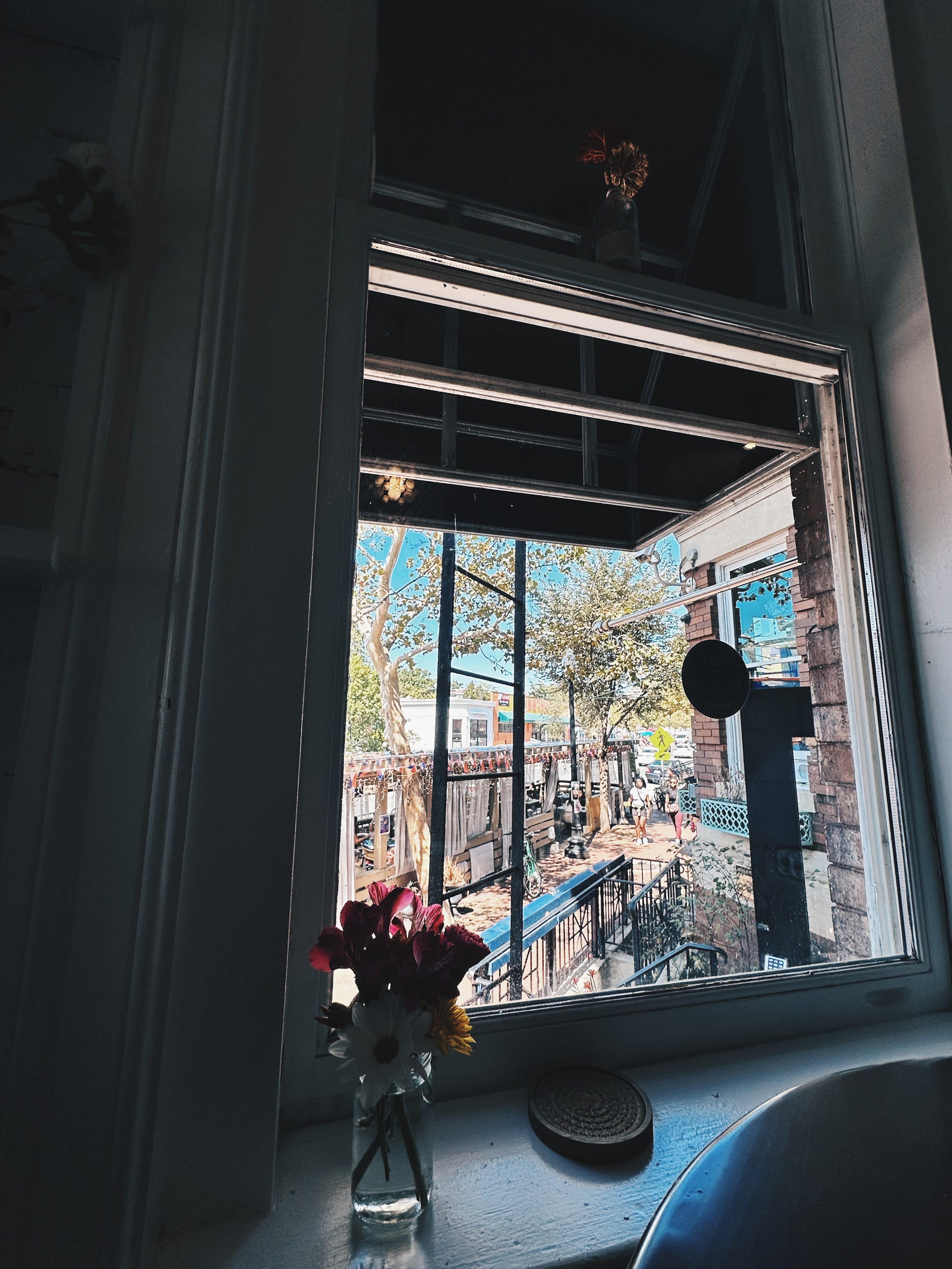
Washington DC is a contrast of two atmospheres. The first is unavoidable. The broad avenues Pierre Charles L’Enfant drew in 1791, radiating from the Capitol, lined with neoclassical facades designed to communicate permanence. The marble and scale are intentional. The city was built to feel like the idea of a nation made physical, and it succeeds in ways that can be disorienting. The second layer is only visible when you step off the avenues. Georgetown’s brick sidewalks narrow into blocks where Federal row houses still sit. On a Tuesday morning before the coffee shops fill, a dog walker turns off N Street, a Georgetown student cycles past Dumbarton Oaks, the smell of bread drifts from Boulangerie Christophe. This is the city L’Enfant did not design, the one that grew up quietly alongside the monuments and has been here longer than most people who work in the buildings they visit.
Embassy Row threads through all of it. The diplomatic presence that defines Washington’s international character is visible in the flags above the mansions on Massachusetts Avenue, but its real influence is in the culinary ecosystem it created over generations. Families who came for postings and stayed. Communities that built restaurants before anyone called the neighborhoods destinations. The Filipino kitchen in Mount Pleasant and the Peruvian dining room in Shaw thrive because the District of Columbia has been an international city for longer than its dining reputation acknowledged. The city, not the monuments, is worth the trip.
The Escape
The Ritz-Carlton, Tysons Corner
McLean, Virginia
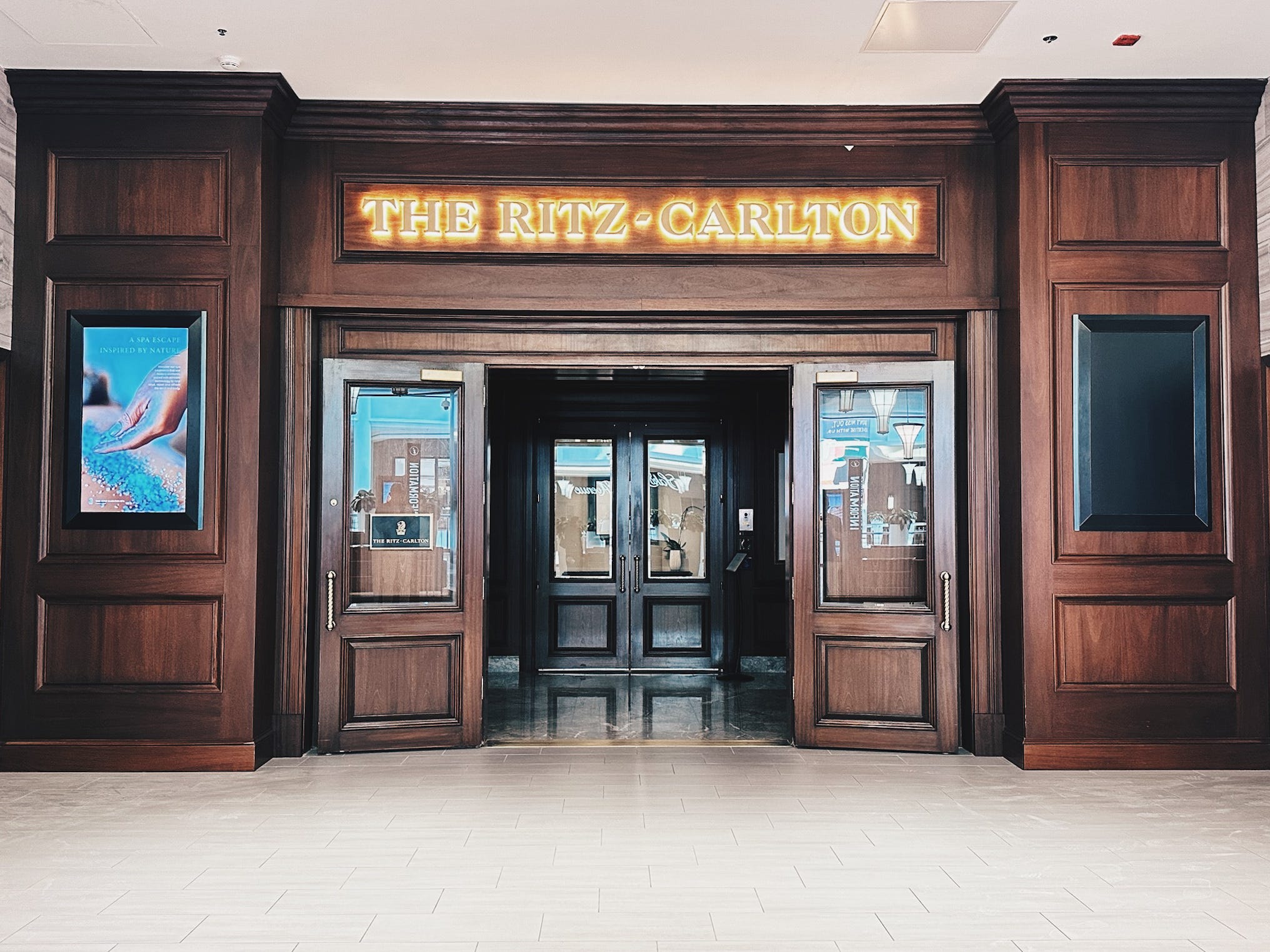
Fifteen miles west of the monuments, Tysons Corner represents Washington’s other power center. The neighborhood runs on commerce rather than legislation, where glass towers house consulting firms, and the Metro finally arrived in 2014. The Ritz-Carlton sits at the end of Tysons Galleria with an entrance positioned between Prada and Saint Laurent. Despite its connection to the mall, arrival still carries a sense of ceremony: a cul-de-sac around a manicured lawn leading to the 22-floor brick tower. Rooms overlook greenery and nearby towers.
The design vocabulary favors refinement. The lobby offers warm wood paneling, marble flooring, wood-burning fireplaces, and crystal chandeliers. Guest rooms continue the sensibility with upholstered headboards in dark gray, crown molding, and marble bathrooms. Every surface confirms quality. The weight of the door as it closes. The silence that follows. Below, the Galleria hums with Bottega Veneta and Ferragamo, a vertical integration of luxury that eliminates the question of where to shop.
Entyse, the hotel’s wine bar and lounge, functions as a sophisticated pre-dinner gathering space with occasional live performance and a proper afternoon tea service. The beverage program spans seasonal cocktails and both Old World and New World wines with enough depth to warrant an evening without leaving the property.
The location works particularly well for travelers interested in Washington beyond the National Mall. Tysons Corner offers proximity to the Galleria’s shopping, the wine country of Middleburg less than an hour west, and Georgetown twenty minutes through tree-lined parkways.
Rooms from $298. Book directly for club access.
The Return List
Places that merit deeper exploration on future visits because they require time or circumstance this trip did not allow.
The new Georgetown property, opened in February 2025, occupies a combined converted office building and two townhomes on a quieter edge of Georgetown. The location situates you in Washington’s most architecturally coherent neighborhood, where the cobblestone streets and preserved row houses require no imagination to understand what the city looked like two centuries ago. Rooms boast views of Georgetown’s quieter, residential character. Suites occupying two stories with serviceable kitchens and fireplaces are available for the complete townhome experience. Requires overnight evaluation to confirm whether the renovation and location translates to a comfortable, local stay.
Pendry Washington DC, The Wharf
The Southwest Waterfront’s transformation from underutilized industrial corridor to the city’s most animated dining and entertainment district took less than a decade. The Pendry features Potomac views that extend toward Virginia. The design leans contemporary luxury with a geometric exterior, floor-to-ceiling windows, marble bathrooms, and sleek four-poster beds. The position rewards those who want proximity to the water and The Wharf’s restaurant concentration without committing to Shaw or Georgetown’s more residential pace. Needs proper stay to assess whether the waterfront views and interior quality justify the premium over Tysons or Georgetown alternatives.
The 1925 Beaux-Arts property on Connecticut Avenue has hosted inaugural balls, accommodated American presidents and global royalty, and absorbed enough political history that its corridors whisper of decisions made. The interior has been restored to its original grandeur with columns and crystal chandeliers, while rooms have been updated for modern comfort. The location anchors the business corridor between the White House and Dupont Circle, which positions you for Embassy Row exploration. Merits evaluation to determine whether the historical architecture and political atmosphere translate into a stay that rewards the investment.
The Table
Amazonia
Shaw
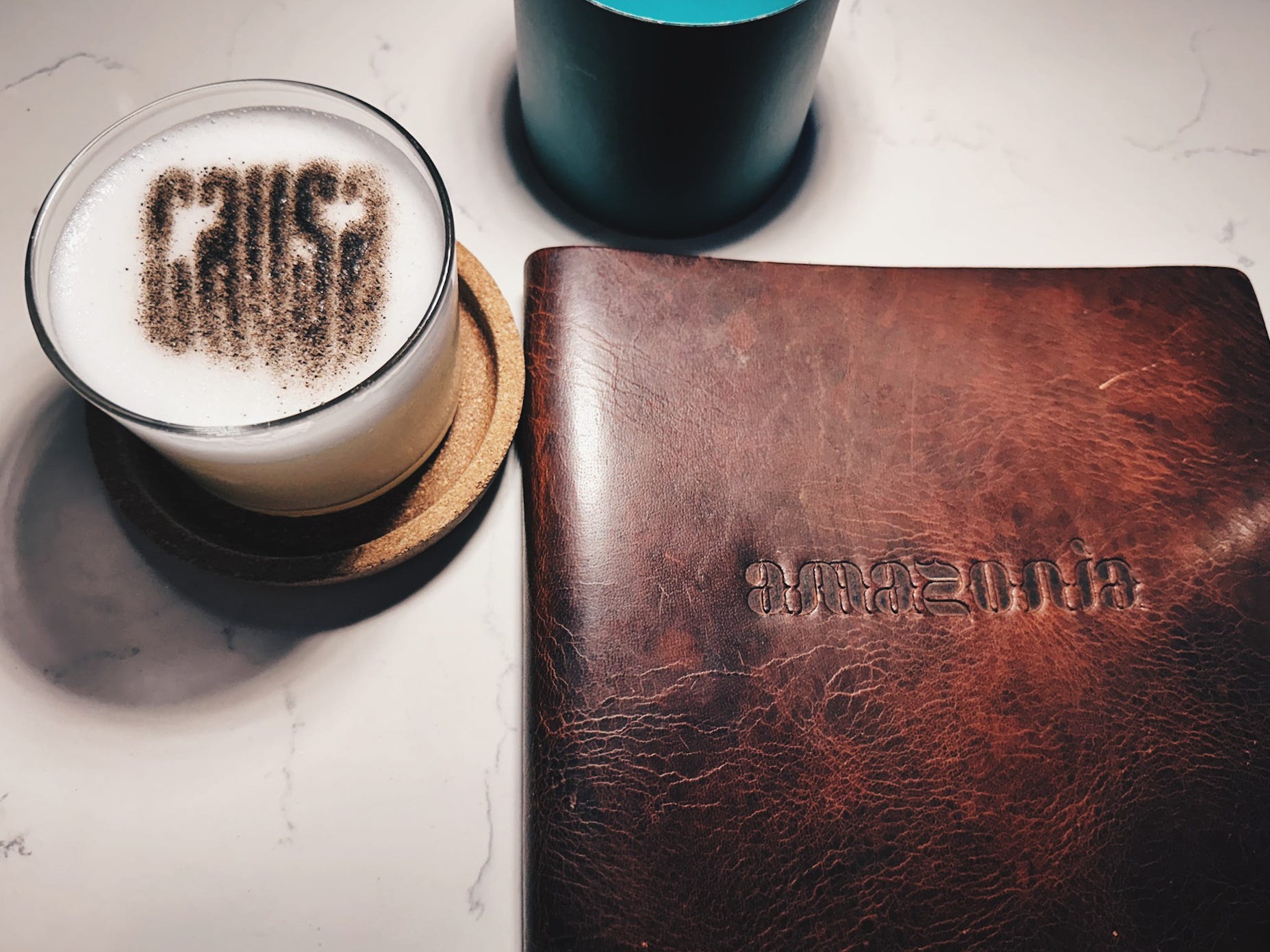
The Peruvian restaurant operates on the second floor of a reimagined two-story house on the quieter side streets of Shaw. The interior references the Amazon with green upholstery and layered decor, but the majority of the dining space opens onto a rooftop terrace where dim lighting and exposed brick create an intimate atmosphere above the neighborhood’s rooflines. Amazonia is chef Carlos Delgado’s more casual approach to Peruvian technique compared to Causa, the tasting experience one floor below. Both share the kitchen but maintain entirely distinct atmospheres and intentions.
The menu reads as a tutorial in Peruvian coastal cuisine: ceviche clásico with sweet potato and cancha, a range of proteins from the anticucheria, preparations centered on plantains and octopus. Dishes are designed for sharing, which creates the right pace for the pisco program that should anchor the evening. The pisco sour is the most requested item, but the tasting options deliver an education in how terroir varies across Peru’s growing regions and how that variation translates into distinct grape character.
Reserve three weeks ahead for weekend evenings. Tuesday and Wednesday offer the same atmosphere with lighter crowds. From $15 per dish.
Purple Patch
Mount Pleasant
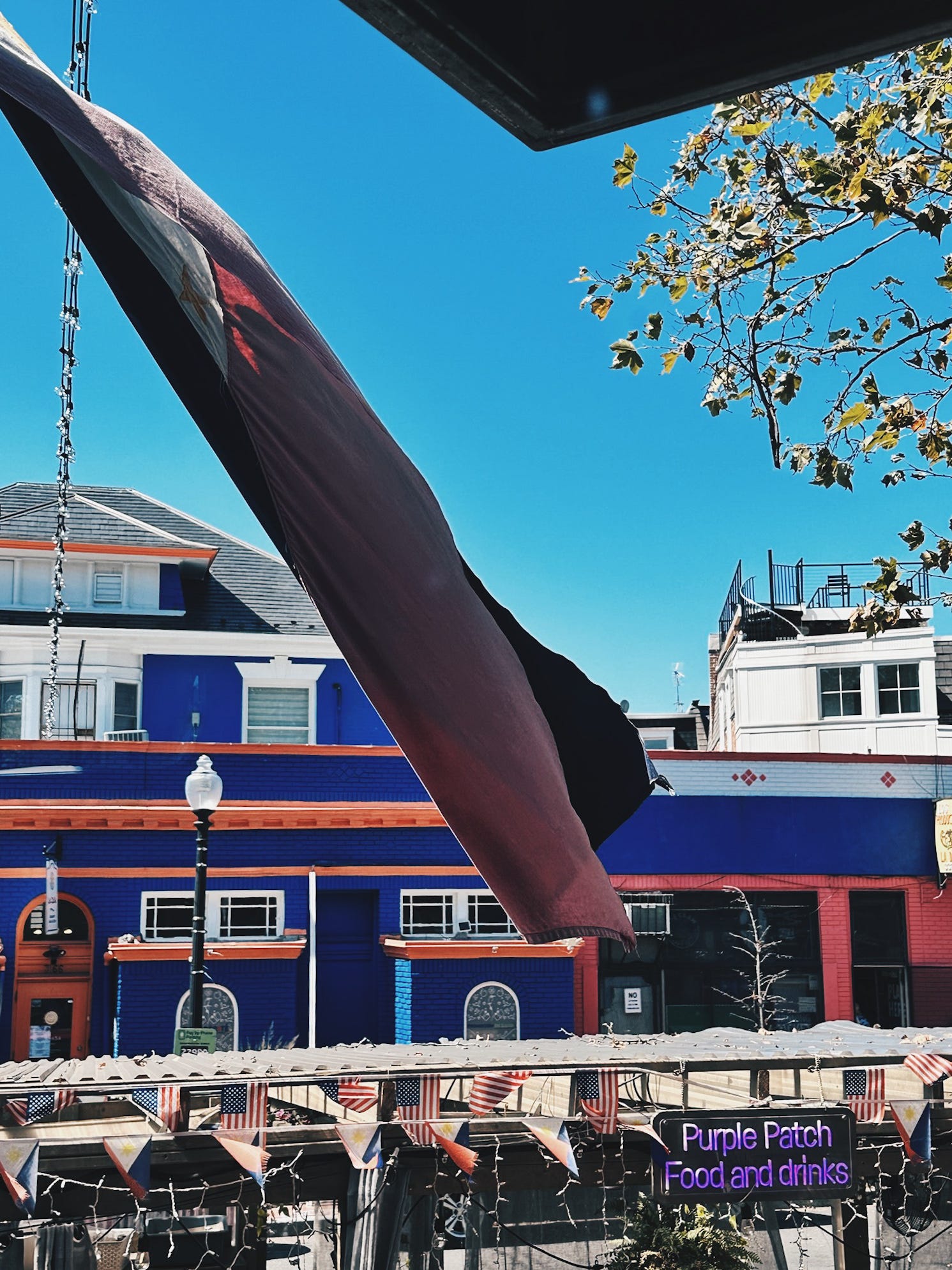
Purple Patch occupies a brick house with bay windows in Mount Pleasant, one of Washington’s most genuinely diverse neighborhoods, where the restaurant’s presence reflects the community it serves rather than a calculated positioning decision. Chef-owner Patrice Cleary runs a Filipino kitchen that feels unambiguously family-run. The interior carries the comfortable eclecticism of a lola’s home. You may meet Cleary’s family depending on the hour.
The cuisine is authentic without being precious. Garlic rice anchors brunch. Longanisa and chicken adobo follow with ube pancakes and lechon kawali for the full experience. Dinner reflects current Filipino culture as it actually exists: Filipino spaghetti alongside calamansi preparations and fresh pandesal. This is not a restaurant packaging nostalgia for a non-Filipino audience. It is a neighborhood restaurant that happens to be exceptional.
Reserve a few days ahead for weekends. Walk-ins work on weekdays. Request the second floor for a more intimate, residential feel. Brunch from $8, dinner from $16 per dish.
Ottoman Taverna
Mount Vernon Triangle
Ottoman Taverna serves Turkish cuisine without concession, in a dining room where a lattice screen separates the bar and hexagonal light fixtures reference the geometric traditions of Islamic and Ottoman architecture. The menu reflects the specificity of actual Turkish cooking rather than the generic Mediterranean that typically passes for it in the United States. The dining room confirms this: the wait staff and a significant portion of the clientele are Turkish.
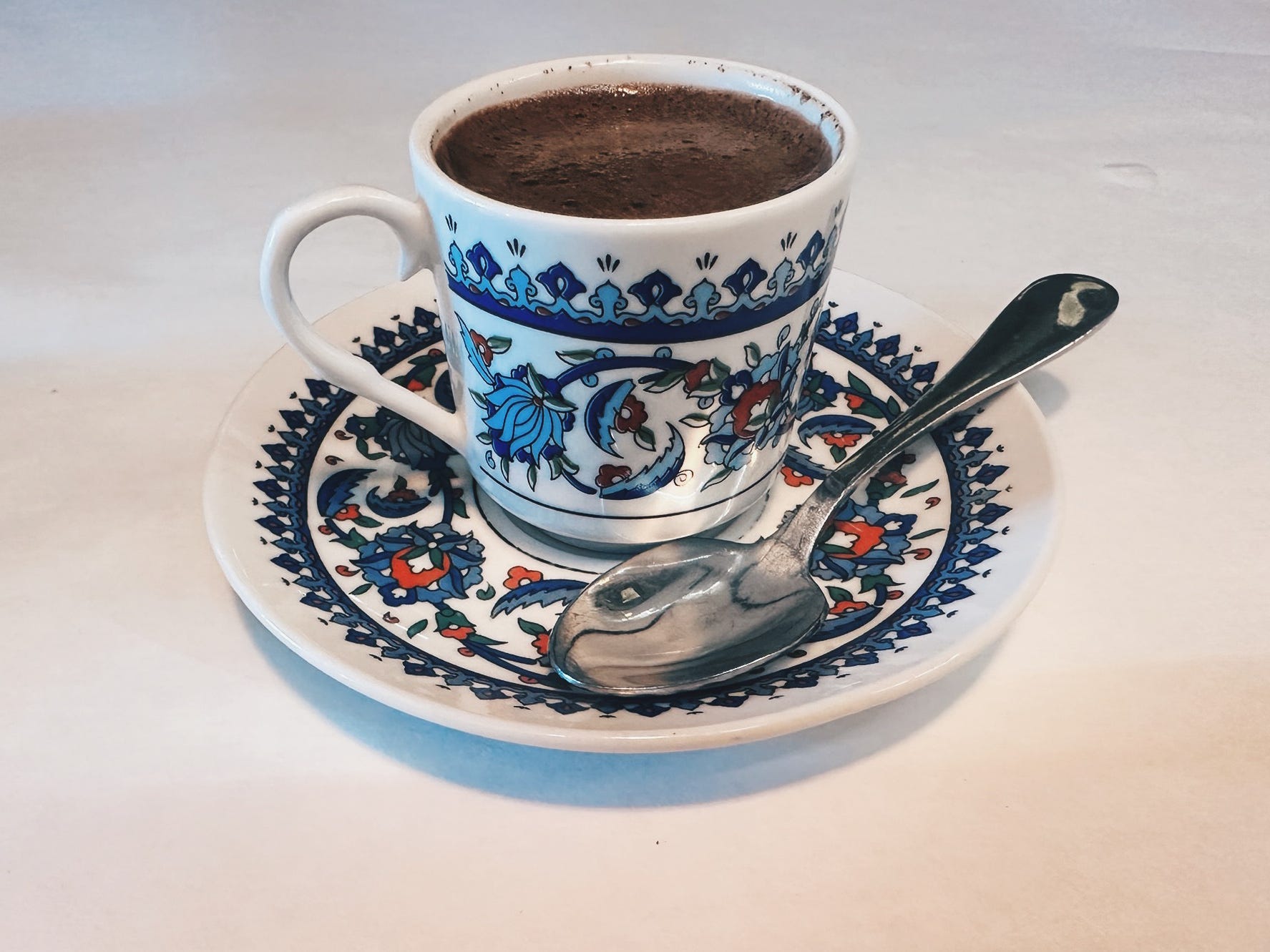
Begin with meze regardless of what follows. The kıymalı pide arrives as an umami answer to pizza. Dolma carries the particular sourness of grape leaves against warm rice. Sigara böreği shatters audibly, releasing steam and stretching cheese. This is the meal’s opening movement, meant to unfold over wine and conversation before the beef kebap arrives so tender it yields to a fork. Finish with künefe, a delicate pastry of cheese and crunchy phyllo with syrup. Turkish coffee closes the meal in small ceramic cups with an intricate floral pattern, grounds settling slowly like silt.
Walk-ins welcome throughout the week. The dining room handles larger parties well. Dinner from $25.
The Return List
Reservations needing more time or circumstance than this trip allowed.
Carlos Delgado’s tasting experience occupies the ground floor of the same building as Amazonia, sharing a kitchen but operating as an entirely different proposition. Where Amazonia invites sharing and spontaneity, Causa builds a structured progression through Peruvian technique. The tasting format creates space to understand how the range of climates across the country, from coast to highlands to jungle, produces an ingredient vocabulary that most culinary traditions cannot match. Merits a dedicated evening to assess whether the formal structure serves the cuisine as well as Amazonia’s casual approach.
Kevin Tien’s Vietnamese kitchen in Penn Quarter works within and beyond the tradition simultaneously. The menu moves from perilla and chili garlic to durian mousse and pandan panna cotta, Vietnamese flavor applied to unexpected forms. The cocktail program follows the same methodology, lemongrass and lotus tea reframed. Merits evaluation to determine whether the authenticity is maintained through the creativity.
The French-expat patisserie operates on a block in Dupont Circle. The interior nods to its European roots. French-trained ownership in an American market typically produces one of two outcomes: an authentic technical foundation that finds its footing, or nostalgia for Paris that never quite translates. The local reputation suggests the former. Needs a morning visit to assess lamination quality, pastry selection, and whether the croissants justify the detour.
The Edit
Apple Carnegie Library
Mount Vernon Triangle
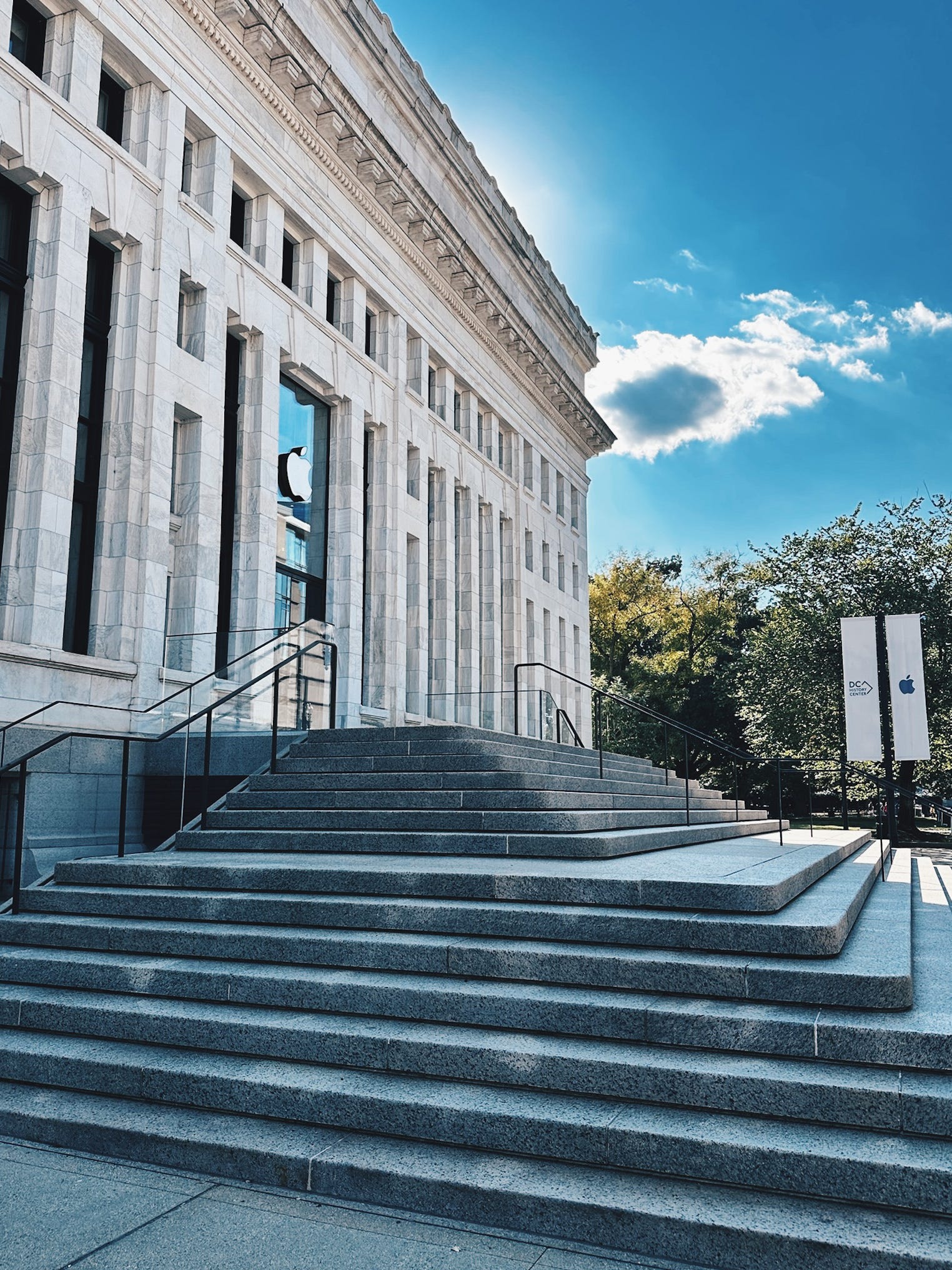
The 1903 Beaux-Arts library now houses an Apple flagship through a restoration that preserved the architectural bones while adapting the interior for contemporary retail. What makes this architectural pilgrimage worthwhile isn’t the Apple retail itself (though it is executed with expected thoughtfulness) but rather the lesson in adaptive reuse. The exterior limestone facade and original windows remain untouched. Interior architectural elements, coffered ceilings and ornate moldings have been preserved and integrated. The building’s structure tells the story of early 20th-century civic ambition, when libraries were designed to communicate the moral seriousness of public education through architectural grandeur. Walk through whether or not you need anything from Apple.
Tysons Galleria
McLean, Virginia
Directly below your room at the Ritz-Carlton, Tysons Galleria offers three levels of luxury retail done with enough selectivity to avoid the mediocrity that typically defines suburban shopping centers. Max Mara outerwear to carry you through the East Coast chill. Dior’s evolution to playful femininity under Jonathan Anderson’s direction. Classic Cartier timepieces that function more like jewelry. This is not just suburban mall aspiration but an effortless convenience of quality when you prefer to avoid Georgetown’s weekend crowds.
Complete your shopping in two hours, return upstairs to dress for dinner. This is luxury without friction.
Georgetown
M Street & Wisconsin Avenue NW
The neighborhood is best approached as a morning. Stop at Boulangerie Christophe before the crowd thickens and the croissant selection diminishes. The Federal-style row houses on the residential blocks north of M Street are worth the walk on their own terms. Le Labo’s standalone flagship carries the full fragrance line including city exclusives from locations around the world, available for a few weeks each September. DC does not have its own exclusive scent, but the benefit of the flagship is time: sample in the morning, walk the neighborhood, return an hour later when the dry-down reveals whether a fragrance actually works on your skin or simply smelled good at the counter.
The Return List
Shops and showrooms that merit dedicated visits on future trips.
The Georgetown boutique carries international women’s designers with a curation that favors understated quality over recognizable logos. Standouts include Dries Van Noten, The Row, Fforme. The particular curation of a good independent boutique reflects its owner’s taste directly, and Relish’s longevity in a neighborhood with high retail turnover suggests that taste has found its audience.
A second Georgetown boutique with a different sensibility, focusing on consignment contemporary labels alongside vintage pieces. The facade of the shop itself reflects the season, framing the bay windows of a reimagined townhouse and creating an intimate atmosphere.
Less than an hour west of Tysons Corner through the rolling hills of Virginia’s horse country, the town of Middleburg anchors a budding wine region of 198 square miles that most visitors to Washington overlook. The vineyards here primarily work with Bordeaux varietals, cabernets and merlot, alongside viognier and chardonnay, in a climate of well-drained clay soil and humid summers. Warrants a half-day from Tysons to assess whether the production justifies the detour from better-known American wine regions.
On Planning
Washington DC rewards three to four day stays, providing enough time to understand the difference between the monuments and the neighborhoods, to eat across Mount Pleasant and Georgetown without rushing, and to make the drive to Middleburg.
For those who know Washington DC well, what deserves deeper coverage on a return visit?
Eature is written for those who care about where they stay, why a place feels the way it does, and how travel fits into a life well-lived.
New here? Read about how Eature works
More Eature Guides: Tokyo | Kyoto | Osaka | Kobe | Nara & Uji | Sapporo | Chicago | Denver | Orange County