
VOL. II, ISSUE 16
My first trip to Italy was in the summer years ago. I mostly remember the heat that followed me down cobblestone streets and into restaurants. The air conditioning didn’t feel quite as cold as I was used to.
I also remember the clothes. Loose white trousers, pale blue button-ups, and cream dresses in storefronts and on stylish women who didn’t seem nearly as bothered by the weather as I was. The fabrics had structure but moved effortlessly as they sauntered by, somehow at home in both the heat and the centuries-old streets.
At the time, I knew very little about linen, but that first trip made me realize why people wear it.
Wearing Linen in Venice
Years later, I returned to Italy, this time Venice, with my own pair of cream linen trousers. They were loose enough for long days of walking through the city and light enough for the summer heat. They felt appropriate for a full day of visiting cathedrals, wandering canals, and dining in a trattoria.
Sure, by the afternoon, they were wrinkled, but that turned out to be part of what I liked about them. The nature of the linen created a sense of ease from how it changed with wear. The fabric itself holds the events of the day in its folds. The drape also felt relaxed without becoming overly casual, which made the trousers easy to wear from museums to dinner.
That connection between linen and Venice strengthened in Burano. I had gone to the island for its colorful houses and lace-making history, but while exploring Emilia Burano, I found myself increasingly interested in the textiles themselves.


Burano is known for its intricate needle lace, historically made of superfine linen and silk threads, and sometimes even silver and gold. When the craft was at risk of disappearing in the nineteenth century, the Burano Lace School opened in 1872, preserving techniques that had been passed down on the island.
Emilia Burano has grown over four generations out of the same lace-making tradition. Today, the atelier extends its textile work beyond historical lace into contemporary linens for the home. As I walked through the boutique, the lace was stunning, but it was the fibers and the weave that were captivating.
Since Venice
Back home, linen has begun to move beyond my closet.
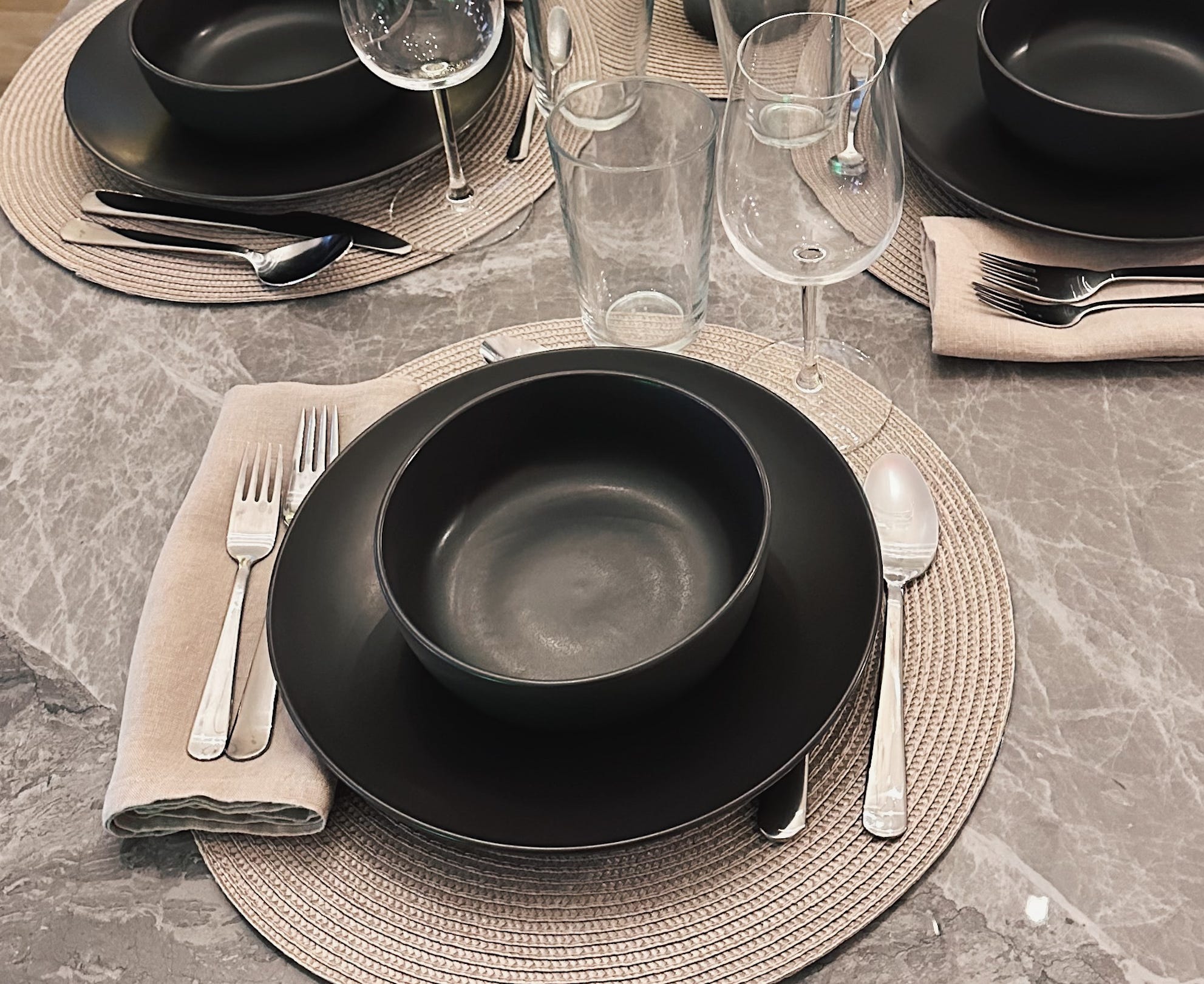
I bought linen napkins to use with my stone dinnerware, directly inspired by what I had seen displayed at Emilia Burano. I purchased linen curtains because of the way their weave filters light while adding texture to a room.
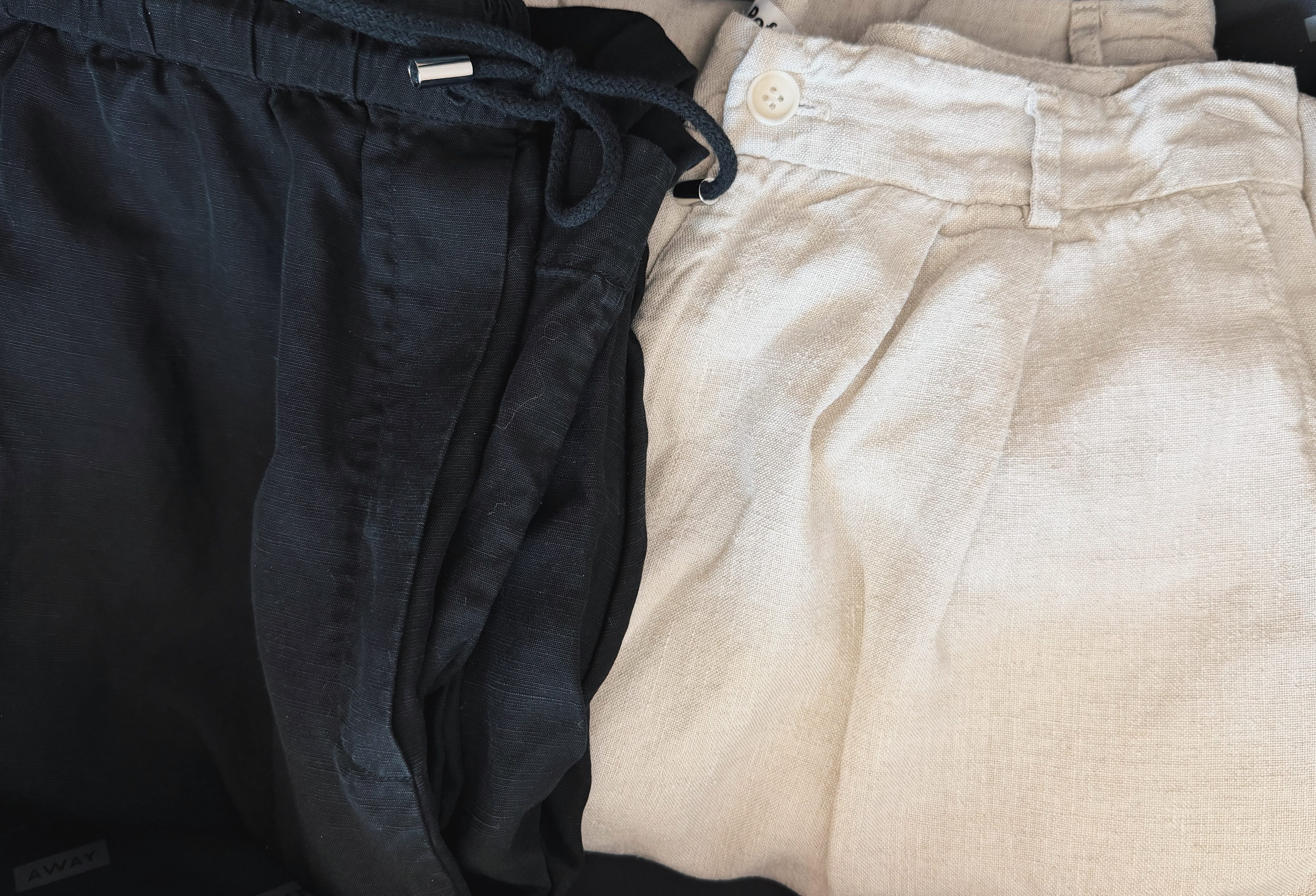
My wardrobe has also changed. Pure linen is beautiful, but I have become more interested in how its properties change when blended with other fibers. One of my new favorite pieces for travel is a pair of black Toteme drawstring trousers made of a lyocell-linen blend. They retain some of the texture and breathability that I love about linen while wrinkling less easily than the cream trousers I wore through Venice.
More unexpectedly, learning about linen has made me start paying attention to texture. I notice the cloth binding on a planner or the way an irregular woven surface complements polished stone. I’ve become particularly interested in combinations of materials that enrich each other. A linen napkin against marble. A wool sweater over a cotton T-shirt. The frosted green glass of a sake set sitting on a stone table. A silk scarf from Lake Como wrapped around a pair of linen trousers.
Stone has veining and variation. Frosted glass diffuses light. Silk reflects it. Linen has a weave that wrinkles, and against marble or glass, the imperfection creates contrast. It is an effect I first noticed in clothing on hot Italian streets and now find myself recreating in interiors and outfits.
What I Want to Pack Next
Learning more about linen has also changed how I shop.
There is a pair of green linen trousers from Loro Piana currently on my wishlist. The drape of the leg feels modern, while the saturated green reads dressier than the cream linen trousers already in my closet.
I’m also looking for a black linen button-up. I can imagine it tied over a swimsuit at the beach in Southern California, buttoned with trousers for dinner in Tokyo, or thrown on over a tank top before walking into a church in Venice.
Since returning home, I find myself noticing the weave of a napkin, the surface of a curtain, and how materials change when placed beside one another. Linen began as a fabric I wore in warm weather. In Venice, it became a lesson in what materials can contribute to a space or an outfit.
Explore Volume I: Tokyo | Kyoto | Osaka | Kobe | Nara & Uji | Sapporo | Chicago | Denver | Orange County